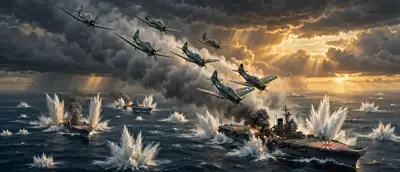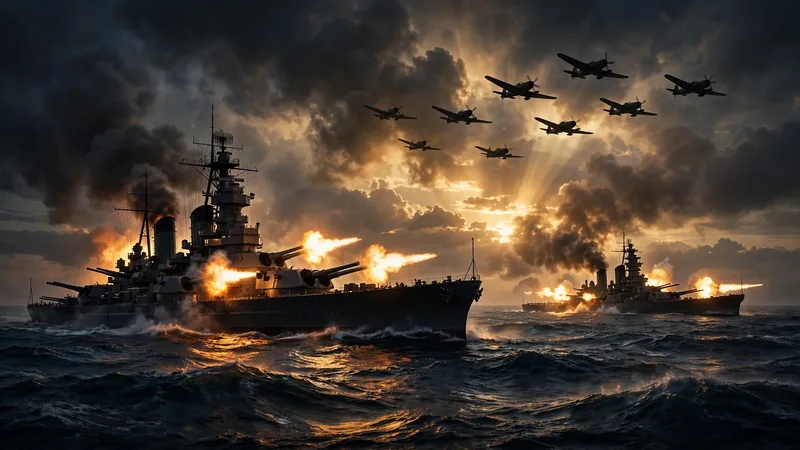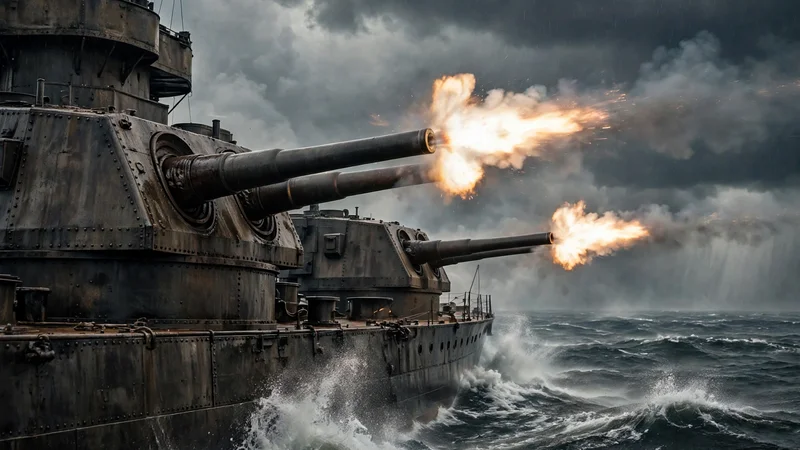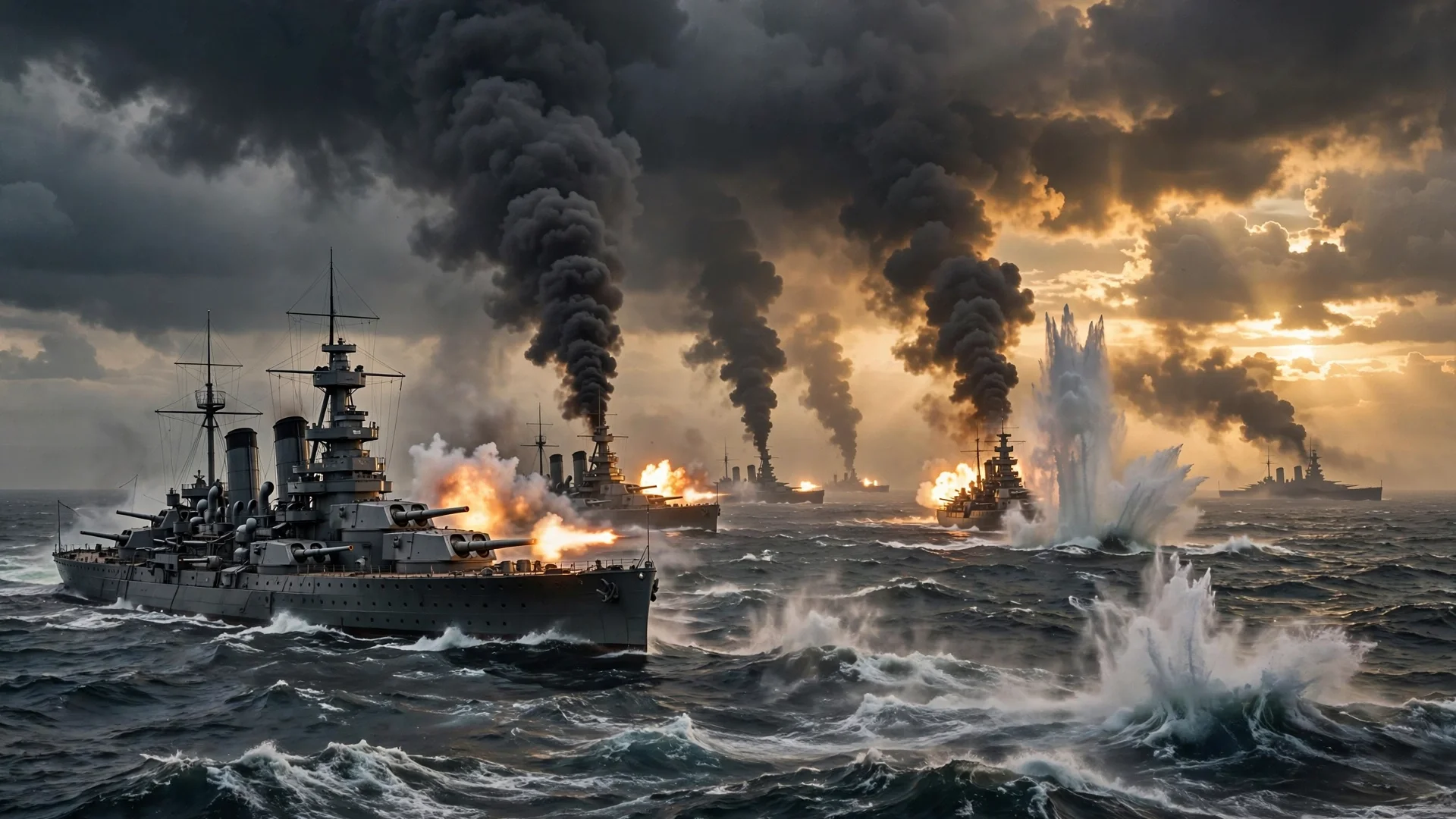
This battle of Tsushima 1905 explained starts with a number that sounds like a typo: 18,000. That's how many nautical miles Russia's Baltic Fleet sailed — from the freezing Baltic Sea, around Africa, across the Indian Ocean — to reach a narrow strait between Korea and Japan in May 1905. Seven months at sea. And when the fleet finally arrived, Japan destroyed it in about two days.
Here's the short version, and I promise the numbers are real: on May 27–28, 1905, Admiral Tōgō Heihachirō's Japanese fleet intercepted Russia's exhausted Second Pacific Squadron in the Tsushima Strait and annihilated it. Twenty-one Russian ships sunk or captured. Roughly 5,000 Russians dead. Japanese losses: 117 men and three torpedo boats. It remains the only decisive battle ever fought between modern steel battleship fleets — and the first time in the modern era that an Asian power beat a European great power in war.
That's the headline. The story underneath is better — and stranger — than the headline.
The Voyage of the Damned: 18,000 Miles to Nowhere
To understand why a Russian fleet was sailing around the world in 1905, you need the war first. In February 1904, Japan — a country most Europeans still filed mentally under "exotic" — launched a surprise torpedo attack on Russia's Pacific naval base at Port Arthur, in China. Then Japanese armies started beating Russian armies on land, which nobody in St. Petersburg had budgeted for. Port Arthur held out for months, then fell on January 2, 1905. Russia's Pacific Squadron was gone, sunk or scuttled in the harbor.
So Tsar Nicholas II did what empires do when the plan collapses: he improvised something enormous. He ordered the Baltic Fleet — Russia's other fleet, sitting uselessly in European waters — to sail to the Pacific and save the situation. Vice Admiral Zinovy Rozhestvensky got the job. Nobody envied him.
The voyage was a rolling catastrophe before a shot was fired. Dozens of warships, some of them obsolete rust-buckets, crewed by sailors many of whom had never left the Baltic. Coaling was a diplomatic nightmare — Britain, furious about the war, wouldn't let them coal in British ports, so colliers had to rendezvous at sea like smugglers. The ships grew beards of barnacles and weed; speed bled away with every week. Morale curdled into something between resignation and gallows humor.
And then, in the North Sea in October 1904, the fleet opened fire on a group of British fishing trawlers near the Dogger Bank, mistaking them in the dark for Japanese torpedo boats. Men died. Britain nearly went to war with Russia over it, and Rozhestvensky had to keep sailing with the Royal Navy shadowing him and the whole world laughing. It is hard to overstate how broken this fleet was before it ever saw a Japanese ship. They weren't sailing to victory. They were sailing to Vladivostok and hoping.
May 27, 1905: Crossing the T
The Japanese had one job: don't let the Russians through the Tsushima Strait. The strait is a roughly 60-mile bottleneck between Korea and Japan, and Rozhestvensky had three bad options — go through it, go around Japan the long way through the Pacific (and arrive with empty coal bunkers), or admit the whole voyage was pointless. He chose the strait. Tōgō was waiting.
Here's where the modern age showed up. On the evening of May 26, a Japanese patrol ship spotted the Russian vanguard in the fog. A decade earlier, that sighting might have meant nothing — by the time a runner got the news to Tōgō, the Russians would be gone. But Japan had fitted its fleet with the brand-new wireless telegraph. The sighting crackled through the air to Tōgō's flagship Mikasa in minutes, and Tōgō hoisted his famous reply: "The rise or fall of the Empire depends on this battle. Let every man do his utmost." Any battle of Tsushima 1905 explained guide that skips the radio is missing the real weapon of the day.
Tōgō's response is still taught in naval colleges. As the Russian column steamed through the strait on the morning of May 27, Tōgō turned his entire battle line in a great U across the head of the Russian formation — "crossing the T." Picture it: the Russians sailing in a line, and the Japanese fleet cutting across their bow like the top bar of the letter T. Every Japanese gun could bear on the lead Russian ships. Most Russian guns, pointed sideways along their own line, could fire at almost nothing.
Rozhestvensky's flagship, the Knyaz Suvorov, opened fire first — and then the Japanese gunnery, the thing Japan had drilled for years, went to work. Japanese shells, loaded with a high explosive called shimose powder, didn't punch neat holes; they burst into fireballs that shredded superstructures and started infernos the crews couldn't fight. The Suvorov was hammered into a burning wreck within the first hour. Rozhestvensky himself was wounded and knocked unconscious. The Russian fleet lost its commander before noon.
The battleship Oslyabya, already low in the water from design flaws, took hit after hit and rolled over and sank.
The first modern battleship ever sunk by gunfire alone. By sunset, four Russian battleships were gone, and the rest of the fleet scattered into the gathering dark — still hundreds of miles from Vladivostok, with the sea full of Japanese torpedo boats closing in.
Night of the Torpedo Boats: May 27–28
Night at sea in 1905 was a special kind of terror, and the Russians got the full dose. Tōgō's destroyers and torpedo boats — dozens of them — hunted in the dark. The Russians had no night-fighting doctrine, exhausted crews, and no answer for attacks they couldn't see coming. Ships exploded in the black water. Men who'd survived the day's gunfire died in torpedo strikes out of nowhere.
Dawn on May 28 found the survivors scattered and broken. Rear Admiral Nikolai Nebogatov, now the senior Russian officer afloat, had four battered ships left — the battleships Nikolai I and Orel and two old coastal defense vessels — hemmed in on three sides by Japanese cruisers, with Tōgō's main force once again crossing his T. The Japanese opened fire from 12,000 yards, beyond the reach of Nebogatov's best guns. It was target practice.
Nebogatov did the math and chose lives over honor. He had his flag lowered to half-mast and hoisted the international signal for surrender.
"I am an old man of 60," he reportedly told his crew before leaving his ship. "The lives of the 2,400 men in these ships are more important than mine." He was right — and Russia court-martialed him for it anyway, sentenced him to death, then commuted it to prison. That's how empires say thank you.
Rozhestvensky, gravely wounded, was taken off his sinking flagship and became Tōgō's prisoner. When the counting was done: Russia had lost 21 ships sunk or captured, with another six disarmed in neutral ports. Only three vessels — the cruiser Almaz and two destroyers — ever reached Vladivostok. Roughly 5,000 Russians were dead (sources range from 4,380 to 5,045 — the fog of 1905 bookkeeping) and about 6,000 taken prisoner. Japan lost 117 men and three torpedo boats.
Read that again. One hundred and seventeen.
> Love military history? Subscribe to Echoes of Battle on YouTube (@EchoesOfBattleHistory) — a new epic battle every day, cinematic and free.
> Next in the naval series: Battle of Midway Explained: 4 Carriers Sunk in One Day — thirty-seven years after Tsushima, Japan's navy met its own day of reckoning.
---
Aftermath: What Tsushima Changed
Two days of fighting ended a war. With its fleet gone, Russia had no way to contest the seas around Korea and Manchuria, and no stomach left for the fight on land either. In August, both sides sat down at Portsmouth, New Hampshire, where U.S. President Theodore Roosevelt mediated the peace. The Treaty of Portsmouth, signed September 5, 1905, recognized Japan's dominance in Korea and handed over Port Arthur and the southern half of Sakhalin. Roosevelt got the Nobel Peace Prize for it.
For Russia, Tsushima was a detonation under the throne. The humiliation fed straight into the Revolution of 1905 — the "dress rehearsal," as Lenin later called it, for 1917. A regime that couldn't protect its sailors couldn't command their loyalty much longer.
For Japan, the victory was rocket fuel. Overnight, Japan was counted among the world's great naval powers — sixth in the world by the usual reckoning — and the first non-Western nation of the modern era to defeat a European great power in war. The news electrified colonized peoples everywhere; future leaders from Gandhi to Atatürk to Sun Yat-sen took notice. In the West, it fed the ugly "Yellow Peril" panic — fear dressed up as analysis.
Then every admiralty on earth did the same thing: rewrote the rulebook. Speed over tonnage. Long-range gunnery over close brawls. Wireless sets on every bridge. Britain's answer came within a year — HMS Dreadnought, the all-big-gun battleship that made every existing fleet obsolete overnight and kicked the naval arms race into overdrive. The battleship race that helped push Europe toward 1914 started, in no small part, in that strait. That's the battle of Tsushima 1905 explained in strategic terms: two days of fighting, one war ended, one arms race begun.
The 749-to-1 Myth Audit: What the Numbers Really Say
You've seen the viral version: genius Tōgō, flawless Japanese execution, Russians as comic relief. The full battle of Tsushima 1905 explained picture needs a correction — the real story deserves better than a meme.
First, the famous ratio. An academic study of the battle calculated the tonnage sunk at 198,721 tons for Russia against 265 tons for Japan — a 749-to-1 ratio, possibly the most lopsided in naval history. It's a real calculation from serious scholarship. But it's also a ratio that flatters the narrative: tonnage sunk is a strange stat that treats a torpedo boat and a battleship as interchangeable math. The human ratio — roughly 5,000 Russian dead to 117 Japanese — tells the same story without the spreadsheet theatrics.
Second, the "Tōgō genius" framing is overrated in one specific way: it treats the battle as won on May 27, when it was mostly won months earlier. Japan's real advantages were unglamorous — better shells, faster ships, crews who'd been drilling together for a year, and a functioning wireless network. Rozhestvensky's fleet arrived defeated; Tsushima just made it official. Tōgō's U-turn was genuinely brilliant seamanship, executed under fire with the enemy shooting at his flagship. But brilliant tactics on top of overwhelming structural advantage is not the same as a miracle.
What's underrated? The wireless. This was the first battle in history where radio decided the outcome — the sighting report that summoned Tōgō, the coordination of a fleet spread across miles of ocean. Every navy on earth took notes. If you want the single most modern thing about Tsushima, it's not the battleships. It's the invisible signals in the air.
And a caveat the sources force on any honest account: Russian casualty figures wobble between sources — 4,380, 4,830, 5,045 dead depending on who's counting and how. I've used "~5,000" throughout. The Japanese figures (117 dead, 583 wounded) are consistent across sources. When numbers disagree, that's the history telling you to hold them lightly.
Tsushima vs Trafalgar: A Hundred Years Apart
The comparison writes itself — the British naval historian Sir George Sydenham Clarke called Tsushima "by far the greatest and the most important naval event since Trafalgar," and we've been pairing them ever since. But the comparison reveals more in the differences than the similarities.
Trafalgar (1805) was a British victory that confirmed an existing order: Britain already ruled the waves, and Nelson made it official for a century. Tsushima was a victory that created a new order: it announced that the club of great powers had a new member, and that member wasn't European. Trafalgar ended Napoleon's invasion dreams; Tsushima ended a war outright in two days and helped topple a dynasty within months. If you want the naval bookends of the story, read our Battle of Trafalgar Summary: Nelson's Tactics next.
Tactically, they're mirror images. Nelson broke the rules — drove straight at the enemy line in two columns, accepting chaos. Tōgō obeyed the geometry — the perfect crossing of the T, the textbook maneuver executed flawlessly. Nelson died in his victory; Tōgō lived to become a national legend, the "Nelson of the East" (a nickname that tells you exactly how the world processed what happened).
Here's my take: Trafalgar was the greater feat of leadership; Tsushima was the greater shock to the world. Nobody was surprised that Britain won at sea in 1805. Everybody was surprised that Japan annihilated Russia in 1905 — and that surprise rearranged geopolitics for the next forty years.
What If Rozhestvensky Had Gone Around Japan?
The counterfactual historians actually argue about: what if Rozhestvensky had avoided the Tsushima Strait entirely and taken the long way around Japan's Pacific side?
Honestly? It probably only delays the funeral. The Pacific route meant thousands more miles on hulls already fouled, with no friendly coaling stations and a fleet even more exhausted than the one that fought. Tōgō's scouts and wireless network would likely have found them anyway — Japan owned those waters. And even if the Russians had slipped through to Vladivostok, they'd have arrived as a fleet in name only: low on coal, lower on morale, facing a Japanese fleet that could simply wait for them to come out.
The real counterfactual isn't the route. It's this: what if Port Arthur hadn't fallen in January 1905, and the Baltic Fleet had sailed to relieve a living fortress instead of a graveyard? Then Rozhestvensky arrives with a mission that makes sense, links up with surviving Russian ships, and Tōgō faces a combined fleet instead of a funeral procession. That's the fork in the road where history could have bent. By May, the road was already chosen.
3 Lessons for Today
If this battle of Tsushima 1905 explained account leaves you with one thing, let it be this: Tsushima isn't just a sea story. Strip out the coal smoke and it's a case study that keeps repeating — in boardrooms and war rooms alike:
1. Logistics is strategy. The battle was lost in coaling stations and drydocks, not in the strait. A fleet that can't maintain its ships, feed its crews, and arrive ready isn't a fleet — it's a parade that ends in a sinking. Every organization that confuses motion with readiness should read about Rozhestvensky's seven months at sea.
2. Adopt the new tool first. Japan didn't invent the wireless. They just put it on warships and built tactics around it while Russia was still sending messages by flag and runner. The technology edge that matters is rarely the invention — it's the integration. The side that rewires its operations around the new tool wins.
3. Never price your opponent at zero. Russia's high command treated Japan as a lesser power right up until Japanese shells started the fires. Underestimation wasn't a mood; it was a planning assumption, baked into ship design, crew training, and strategy. The bill came due on May 27, in full.
Frequently Asked Questions
A battle of Tsushima 1905 explained roundup isn't complete without the questions readers actually ask — quick answers first:
Who won the Battle of Tsushima?
Japan won decisively. On May 27–28, 1905, Admiral Tōgō Heihachirō's Combined Fleet annihilated Russia's Second Pacific Squadron in the Tsushima Strait, sinking or capturing 21 Russian ships.
How did Japan win the Battle of Tsushima?
Tōgō "crossed the T" — steering his battle line across the head of the Russian column so every Japanese gun could fire while most Russian guns couldn't bear. Superior ship speed, more accurate gunnery with high-explosive shells, better-trained crews, and wireless coordination to intercept the Russians did the rest.
How many ships were lost at the Battle of Tsushima?
Russia lost 21 ships sunk or captured, with 6 more interned in neutral ports; only 3 reached Vladivostok. Japan lost just 3 torpedo boats. About 5,000 Russians died compared to 117 Japanese — one of the most lopsided results in naval history.
Why was the Battle of Tsushima important?
It was the first defeat of a European power by an Asian nation in the modern era. It ended the Russo-Japanese War (Treaty of Portsmouth, September 1905), helped trigger Russia's 1905 Revolution, made Japan a recognized great naval power, and reshaped naval doctrine worldwide — the only decisive battle ever fought between modern steel battleship fleets.
Sources
- Battle of Tsushima — Wikipedia: https://en.wikipedia.org/wiki/Battle_of_Tsushima
- "Rising Sun and Russian Bear" — Warfare History Network: https://warfarehistorynetwork.com/article/rising-sun-and-russian-bear/
- "The Battle of Tsushima: The Only Real Battleship Battle Ever Fought?" — 19FortyFive: https://www.19fortyfive.com/2023/05/the-battle-of-tsushima-the-only-real-battleship-battle-ever-fought/
- "The Battle of Tsushima" — HISTORY.com, This Day in History: https://www.history.com/this-day-in-history/May-27/the-battle-of-tsushima-strait
- Rotem Kowner, Tsushima 1905 (Oxford Great Battles Series) — book interview: https://www.academia.edu/106461407/Tsushima_1905_Book_Interview
- Battle of Tsushima commemorative postcard (Tōgō signal) — Old Tokyo: https://www.oldtokyo.com/battle-of-tsushima-straits-propaganda-postcard-russo-japanese-war-1905/