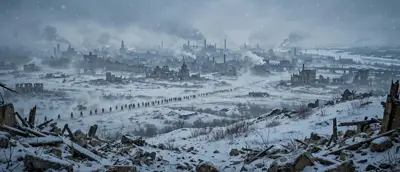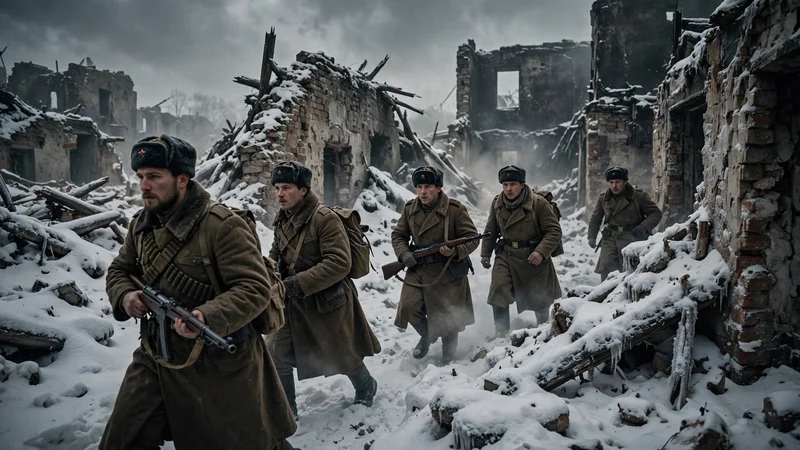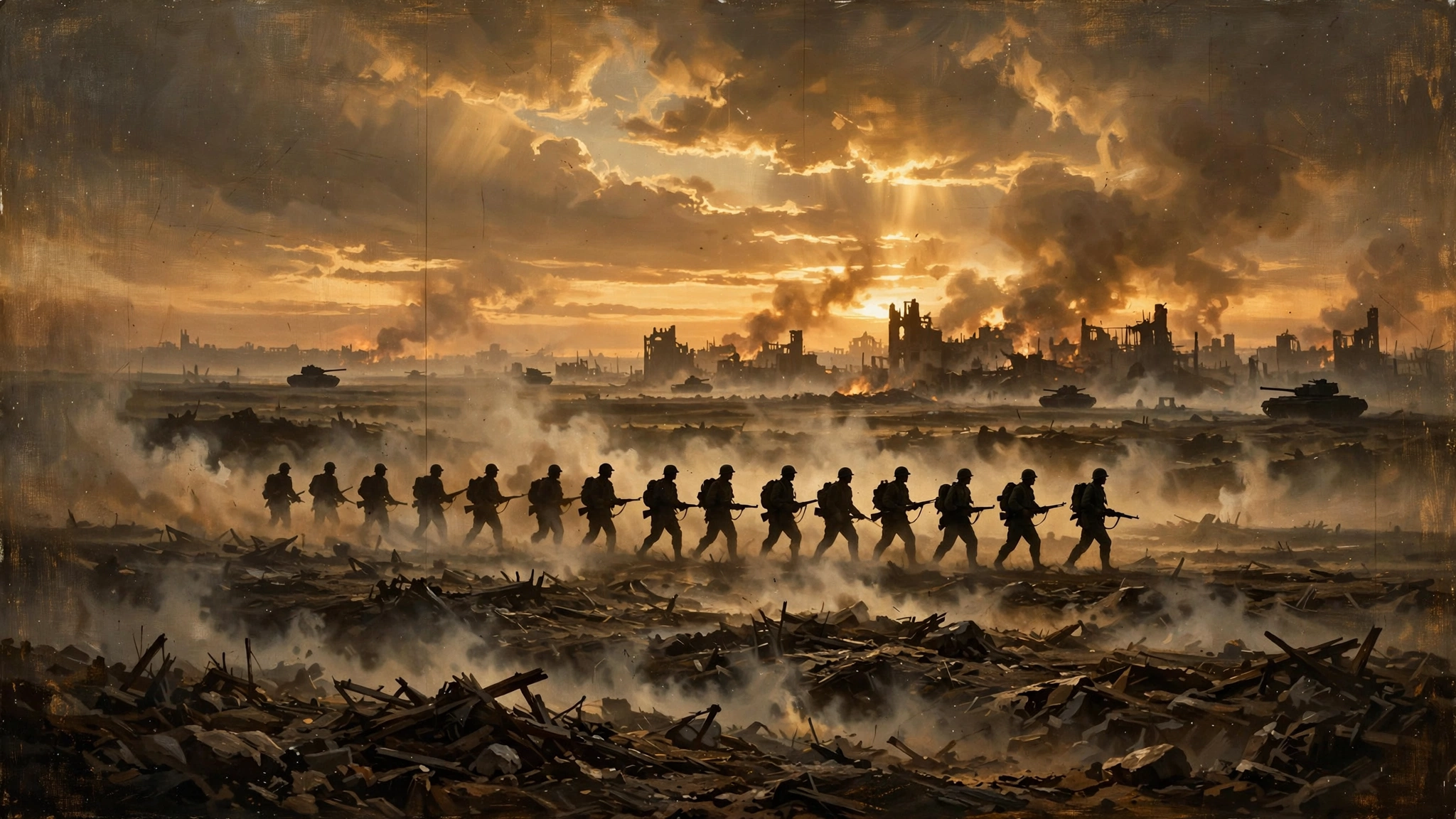
In the summer of 1943, the most powerful armored force Germany ever assembled rolled forward into what its own generals privately called a trap. Waiting for it, in a bulge of front line jutting 150 miles into German-held territory around the Soviet city of Kursk, was the most elaborate defensive system ever built: belts of minefields, anti-tank guns, and trenches stacked eight deep, manned by nearly two million men. Hitler had delayed the attack for two months to wait for new Panther and Tiger tanks. The Soviets used those two months to make the ground itself unconquerable. What followed, from July 5 to August 23, was the greatest tank battle in history — and the moment Germany permanently lost the initiative in the east.
What Was the Battle of Kursk?
The Battle of Kursk was a decisive Soviet victory on the Eastern Front of World War II, fought from July 5 to August 23, 1943. Germany's Operation Citadel offensive — a pincer attack by roughly 780,000 men and 2,900 tanks against the Kursk salient — was stopped by Soviet defenses in depth, then crushed by counteroffensives that retook Orel, Belgorod, and Kharkov. It ended Germany's ability to launch strategic offensives in the east.
Spring 1943: The Salient Forms
The battle began, as so many do, with geography. After the German defeat at Stalingrad and the Soviet winter offensive of 1942–43, the front line in southern Russia had a strange shape: a great rectangular bulge — a salient — jutting westward into German-held territory around the city of Kursk, roughly 150 miles wide at its base and 100 miles deep. Inside the bulge sat two full Soviet fronts (army groups). To the German high command, the salient looked like an invitation: pinch it off at the base, trap everything inside, and restore the initiative lost at Stalingrad.
To the Soviet high command, the salient looked like something else entirely: the one place the Germans were almost certain to attack. In April 1943, Georgy Zhukov — the general who had saved Moscow and Stalingrad — argued before Stalin that the Red Army should not strike first but instead let the Germans exhaust themselves against prepared defenses, then counterattack with fresh reserves. Stalin, burned before by German offensives, agreed. It was the first time in the war the Soviets would deliberately fight a defensive battle at this scale — and they spent the spring making sure the ground was ready.
Operation Citadel: Hitler's Gamble
The German plan, codenamed Operation Citadel (Unternehmen Zitadelle), was straightforward on paper. Walter Model's Ninth Army would attack southward from the Orel area against the northern face of the salient; Hermann Hoth's Fourth Panzer Army, with the elite II SS-Panzer Corps, would attack northward from the Belgorod area against the southern face. The two pincers would meet near Kursk, sealing off the bulge and destroying the Soviet Central and Voronezh Fronts inside it. Erich von Manstein, commanding Army Group South, oversaw the southern effort; the whole operation answered to Hitler himself.
Then came the delays — and with them, the first German defeat of the battle, inflicted by no enemy at all. The offensive was originally penciled in for May. Hitler postponed it to June, then to July, waiting for the new Panther and Tiger tanks to arrive in numbers. Each postponement was a gift to the defenders. Soviet intelligence — from front-line reconnaissance, partisans, and spy networks — kept Moscow informed of the German buildup, its timing, and its axes of attack. By early July, the Stavka (Soviet high command) knew almost everything except the exact hour. The Germans, meanwhile, had aerial photographs showing the Soviet defenses growing thicker by the week — and attacked anyway.
The Soviet Wall: Defense in Depth
What the Germans drove into on July 5 had no precedent in military history. Behind the Kursk salient's front line, the Soviets had built eight defensive belts stretching up to 175 kilometers deep in places. The numbers are staggering: hundreds of thousands of mines, thousands of anti-tank guns dug into camouflaged positions, anti-tank ditches, barbed wire, and trench systems connecting strongpoints designed to be fought from every direction. Civilian labor — much of it women and teenagers from the surrounding region — dug for months to build it.
Behind all of that waited the weapon the Germans could not see: the Steppe Front, a full strategic reserve under Ivan Konev — hundreds of thousands of fresh troops and over a thousand tanks, held back from the line entirely, waiting for the moment the German spearheads blunted themselves. And coordinating the whole defense were Zhukov and Aleksandr Vasilevsky, the two finest operational minds the Red Army produced. The Germans were attacking a position that had been designed, from the start, to absorb exactly the attack they were making.
July 5: The Offensive Begins
July 5 — the northern shoulder holds. Model's Ninth Army attacked the northern face of the salient into the defenses of Konstantin Rokossovsky's Central Front. It was a disaster for the attackers. Soviet artillery, pre-registered on the German assembly areas, opened a massive counter-barrage before the German guns even fired — the Soviets had timed it from intelligence and from captured prisoners. Model's infantry and armor ground forward through minefields under hurricane fire. In a week of grinding assault, the northern pincer advanced barely a dozen kilometers and never came close to breaking through.
July 5–11 — the southern shoulder bends. In the south, Hoth's Fourth Panzer Army fared better. Manstein had concentrated his armor — including the new Panthers and Tigers — against Nikolai Vatutin's Voronezh Front, and the SS panzer divisions punched deeper, tearing through the first and second defensive belts. But every belt cost tanks, fuel, and irreplaceable veteran crews. The Tigers' vaunted long-range guns mattered less in the close, dusty fighting among the ravines, and Soviet anti-tank guns and minefields took a steady toll. By July 11, the southern spearhead had advanced some 35 kilometers — impressive on a map, but still short of a breakthrough, and the German divisions were bleeding out.
July 12 — the trap's jaws close from the other side. While the Germans strained south of Kursk, the Soviets launched Operation Kutuzov against the Orel salient in the north — the very base Model's Ninth Army had attacked from. Model, his offensive already stalled, had to start pulling forces out of the attack to defend Orel. The northern pincer of Citadel was dead.
Prokhorovka, July 12: The Clash of Armor
The same day, south of Kursk, came the battle within the battle. Hoth, desperate for the breakthrough, concentrated the II SS-Panzer Corps — the Leibstandarte, Das Reich, and Totenkampf divisions — for a final push past the last Soviet defensive belt near the village of Prokhorovka. The Soviets answered by throwing in their reserve: Pavel Rotmistrov's 5th Guards Tank Army, ordered to race from its assembly area east of Kursk and meet the SS panzers head-on.
What happened on the morning of July 12 was armored chaos. Roughly 294 German tanks and assault guns faced about 616 Soviet tanks and self-propelled guns across a narrow corridor between the Psel River and a railway embankment. Soviet tank brigades charged at full speed through smoke and dust, closing the range so the Germans' superior long-range guns counted for less — a deliberate tactic, and a costly one. The fighting degenerated into close-range duels, tanks ramming tanks in the haze.
The butcher's bill for that single day tells the story: the Germans lost an estimated 43–80 tanks destroyed or damaged and 842 men; the Soviets lost around 340 tanks and over 3,500 men. Tactically, the Germans held the field. Strategically, it did not matter — the SS advance was stopped cold, and with the northern pincer already dead and Allied landings in Sicily forcing Hitler to divert forces to Italy, the offensive was finished. On July 13, Hitler effectively cancelled Operation Citadel. The greatest tank battle in history had been fought to a standstill — and the side that could afford the losses had won.
Kutuzov and Rumyantsev: The Soviet Counterstroke
Zhukov's April plan had always had two halves: absorb, then strike. With Citadel broken, the second half began. Operation Kutuzov (from July 12) drove into the Orel salient from three sides, threatening to trap Model's entire Ninth Army. Operation Rumyantsev (from August 3) smashed into the German positions south of Kursk with the fresh armies of the Steppe and Voronezh Fronts — the reserves the Germans had never been able to reach.
The results came fast. Orel and Belgorod fell on August 5 — Moscow fired its first victory salute of the war that night, 124 guns, a tradition born at Kursk. Kharkov, Ukraine's great industrial city, fell on August 23, the date historians use to close the battle. In seven weeks, the Red Army had advanced up to 150 kilometers on a 2,000-kilometer front, liberating a vast swath of territory. It was the first successful major Soviet summer offensive of the war — and from this point on, the Germans in the east would only ever retreat.
Kursk Casualties: The Price on Both Sides
Who won the Battle of Kursk? The Soviet Union — completely, and at a cost that shows exactly how the Eastern Front worked.
German losses for the whole Kursk campaign are commonly given as about 165,000 men killed, wounded, or missing (per German military-medical data: roughly 45,000 killed or missing and 120,000 wounded), along with some 760 tanks and assault guns destroyed and nearly 700 aircraft. Those were irreplaceable losses — veteran panzer crews, trained over years, that Germany's shrinking manpower pool could not replace.
Soviet losses were far heavier in absolute terms: commonly cited figures put them near 863,000 men (about 254,000 killed, missing, or captured and 609,000 wounded or sick), with over 6,000 tanks and assault guns destroyed or damaged. The Red Army could absorb those losses and keep attacking; the Wehrmacht could not absorb its own smaller losses and keep defending. That asymmetry — not any single tactical brilliance — is what decided the Eastern Front. The Soviets traded steel and lives for time and ground, and at Kursk the exchange rate finally, permanently favored them.
For the full measure of what industrial-age battlefields could cost, see our bloodiest battles of WW2 ranked guide — Kursk's numbers are grim, but the Eastern Front held worse. And for the battle that set the stage, the encirclement that broke the German Sixth Army a few months earlier, read our Battle of Stalingrad summary.
Why Was the Battle of Kursk Important?
So why was the Battle of Kursk important — beyond the staggering scale of the fighting?
First, it ended Germany's strategic initiative in the east, permanently. Citadel was the last German offensive of strategic scale on the Eastern Front. After August 1943, every major operation in the east was Soviet — a relentless sequence of offensives that would carry the Red Army from Kursk to Berlin in less than two years. Stalingrad had been the turning point; Kursk was the confirmation, the battle that proved the turn was irreversible.
Second, it destroyed the myth of German armored invincibility. The Panther and Tiger — the wonder weapons Hitler had delayed the whole offensive to receive — proved formidable in duels but irrelevant to the outcome. Minefields, anti-tank guns, and defense in depth beat the best tanks in the world, because tanks alone cannot break a prepared position. Every army on earth studied that lesson.
Third, it proved the Soviet way of war worked. The maskirovka (deception) that hid the Steppe Front, the intelligence apparatus that read German intentions, the defense in depth, the sequenced counteroffensives — Kursk was the Red Army's masterpiece, the moment it fought smarter than the Wehrmacht, not just bigger. Zhukov's April gamble — absorb the blow, then strike — became the template for Soviet operations for the rest of the war.
Fourth, it broke the back of the German panzer arm. The divisions destroyed or crippled at Kursk — the SS panzer corps, the Grossdeutschland division, Model's assault formations — were the striking force Germany needed for any future offensive anywhere. What rolled west afterward was a shadow. When the Allies landed in Normandy eleven months later, they faced a Wehrmacht that Kursk had already hollowed out. Our D-Day Normandy landings summary picks up the western story; our why Germany lost WW2 guide puts Kursk in the full picture of the defeat.
Finally, there is the human scale. The men who fought at Kursk — Soviet teenagers manning anti-tank guns, German panzer crews who had survived three years of war, the civilian laborers who dug the defenses — fought the largest armored battle in history across a landscape of wheat fields and ravines. The wheat is still there. The ravines are still there. The tanks are gone, and the world they fought over is gone with them.
What the Sources Tell Us: A Note on the Numbers
Honest history comes with asterisks, and Kursk has plenty. The famous "largest tank battle in history" label for Prokhorovka is genuinely disputed: Russian military historians with access to Soviet archives argue the Battle of Brody in June 1941 involved more armor on both sides. The German tank strength figures are relatively solid (German record-keeping was meticulous); Soviet figures vary more, and the famous Soviet loss totals carry the usual caveats about what counts as "destroyed" versus "damaged and recovered." The casualty ranges above reflect the most commonly cited military-medical data, but other reputable estimates run lower on both sides.
The Lucy spy ring story — that Soviet intelligence had the complete German order of battle from a Swiss-based network — is widely repeated and substantially true in outline, though historians debate how much of the Soviet foreknowledge came from Lucy versus front-line reconnaissance, partisans, and Ultra-derived material shared through Allied channels. What is not in doubt: the dates, the commanders, the defensive belts, the outcome at Prokhorovka, the counteroffensives, and the result. The rest is rounding.
3 Lessons from Kursk
Kursk is a battle, but it is also a masterclass in how preparation beats improvisation. Three lessons worth keeping:
1. The best weapon is knowing what the enemy will do. The Soviets did not win Kursk because they had more tanks — though they did. They won because they knew where, when, and how the Germans would attack, and built the exact defense to meet it. Intelligence, turned into fortifications, was worth more than any tank.
2. New weapons do not fix bad timing. Hitler delayed Citadel for the Panther and Tiger, and the delay cost him the battle. The wonder weapons arrived — and changed nothing. Technology is a multiplier of good plans, not a substitute for them.
3. Reserves win campaigns. The Germans committed everything they had to the attack. The Soviets held back the Steppe Front — a whole army group the Germans never saw coming — and spent it at the decisive moment. The side with the last fresh force usually writes the ending.
Frequently Asked Questions
Who won the Battle of Kursk?
The Soviet Union won decisively. Germany's Operation Citadel offensive was halted within days, and the Soviet counteroffensives that followed retook Orel, Belgorod, and Kharkov. Germany never again launched a strategic offensive on the Eastern Front.
Was the Battle of Kursk the largest tank battle in history?
The July 12, 1943 clash at Prokhorovka is often called the largest tank battle in history, but the title is disputed — Russian military historians with access to Soviet archives argue the lesser-known Battle of Brody (1941) involved more armor. What is not disputed is that Kursk was the largest armored engagement of the war's decisive phase.
What was Operation Citadel?
Operation Citadel (Unternehmen Zitadelle) was the German codename for the Kursk offensive: a pincer attack launched July 5, 1943, with Walter Model's Ninth Army striking from the north and Hermann Hoth's Fourth Panzer Army from the south, aimed at pinching off the Kursk salient and destroying the Soviet armies inside it.
Why did Germany lose the Battle of Kursk?
Three compounding reasons: Soviet intelligence revealed the attack's timing and axes, so the Germans struck the most heavily fortified position in history; Hitler twice delayed the offensive to wait for new Panther and Tiger tanks, giving the Soviets months to dig in; and the Soviets held massive armored reserves (the Steppe Front) that counterattacked once the Germans were exhausted.
How many tanks fought at Prokhorovka?
On July 12, 1943, roughly 294 German tanks and assault guns of the II SS-Panzer Corps faced about 616 Soviet tanks and self-propelled guns of the 5th Guards Tank Army. Soviet armor losses were far heavier, but the German advance was stopped.
Sources
- Wikipedia — Battle of Kursk
- Wikipedia — Operation Citadel
- Wikipedia — Battle of Prokhorovka
- HISTORY — Battle of Kursk