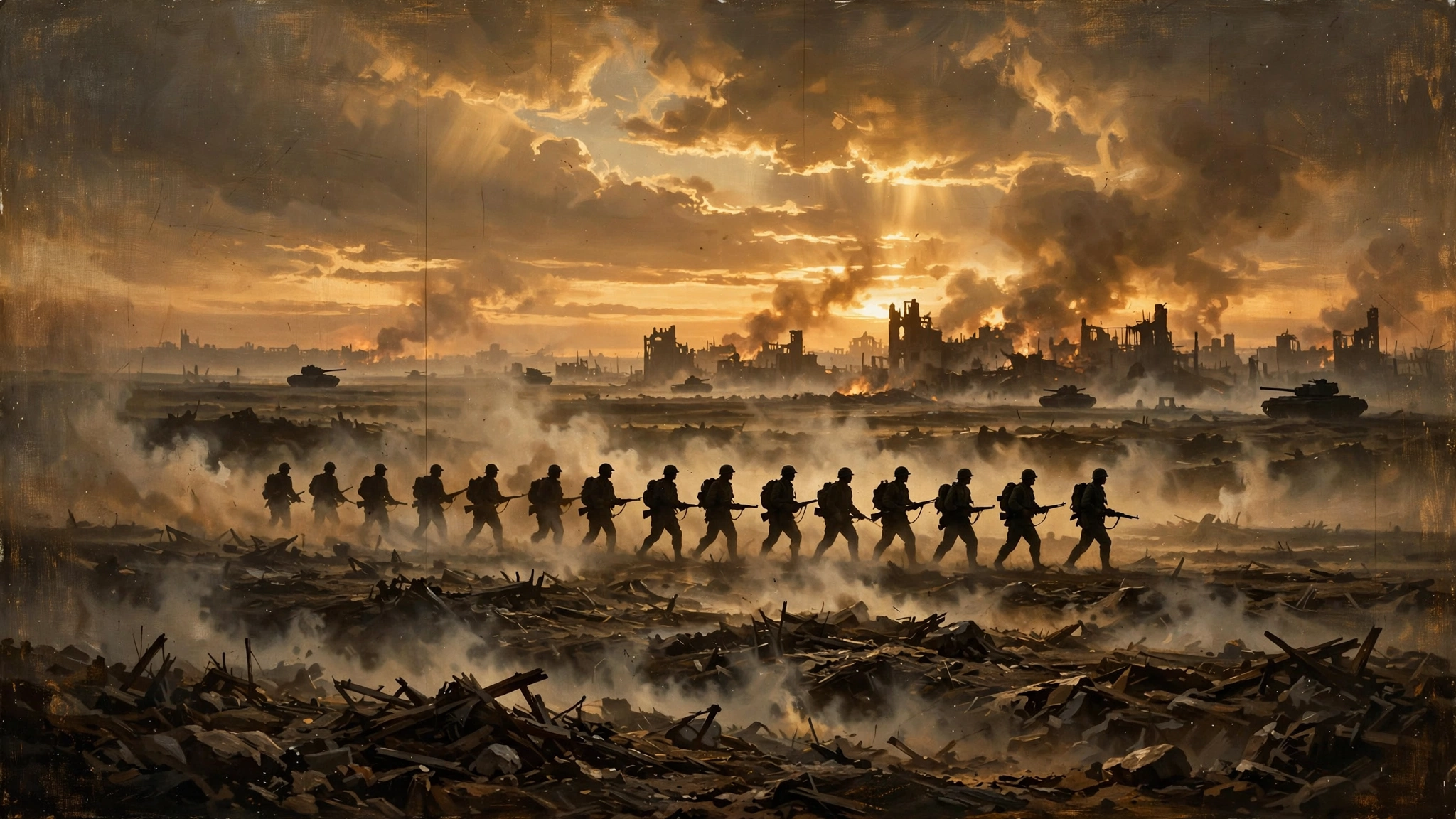
One brutal fact before we start. Roughly two million men were killed, wounded, or captured at Stalingrad. Not across the whole war. Not across a whole campaign. In one city. On one river. Over about 200 days. Let that land before we go any further.
The Battle of Stalingrad ran from 17 July 1942 to 2 February 1943, and among all World War II battles it remains the deadliest ever fought, and the largest urban battle in history. It annihilated an entire German field army, wrecked the armies of three Axis allies with it, and did what three years of war had not: it tore the strategic initiative out of Hitler's hands and handed it to Stalin. Permanently. Kursk, Normandy, Berlin, everything after Stalingrad flows downhill from it. And 1942 dealt the war two turning points, one per hemisphere. While Stalingrad broke Germany in the east, Midway broke Japan in the Pacific.
The Road to Stalingrad: Oil, Pride, and a City Named Stalin
Hitler didn't march on Stalingrad because he needed the city. He marched on it because he needed what lay beyond it: oil. That's the whole story in one sentence. The details, though? They're worth your time.
By spring 1942, Germany's war machine was running on fumes. The 1941 invasion of the Soviet Union had failed to finish the job. Moscow held. Winter bit deep. And the panzers that were supposed to win the war in a single season were now guzzling fuel Germany barely had. On 5 April 1942, Hitler issued Führer Directive No. 41. The summer offensive, Operation Blue, would drive south. Not at Moscow this time. At the Caucasus oil fields. Because whoever controlled that oil controlled the war's engine.
Stalingrad sat on the edge of the plan. An industrial city on the Volga, the great river highway of southern Russia. Cut the Volga and you strangle Soviet supply lines. Take the city and you anchor the flank of the drive into the Caucasus. And then there was the other reason, the one no staff officer would ever put in a memo: the city was named after Joseph Stalin. Hitler wanted it the way a gambler wants the pot. Partly for the money. Partly to humiliate the other man.
Stalin answered on 28 July 1942 with Order No. 227. The famous "Not one step back!" Commanders who retreated without orders would be punished. Panic and desertion would be crushed ruthlessly. Brutal? Absolutely. But perfectly clear: the city bearing the leader's name would not fall while its defenders lived.
Look, strip it down and the recipe is almost absurdly simple. Two dictators' egos, one river, and the fuel supply of an entire war effort. That's the recipe. And any honest account has to start here, before a single shot was fired. Because this was the battle both sides had already decided they could not afford to lose.
The Battle: How a City Became a Meat Grinder
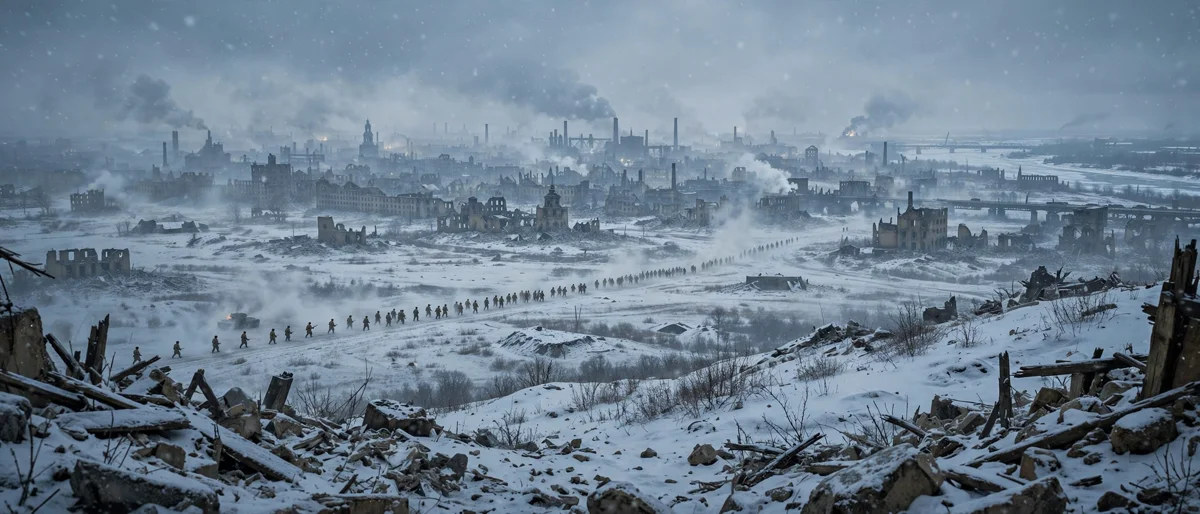
The fighting on the approaches started 17 July 1942. But the battle the world remembers began on 23 August, when Wolfram von Richthofen's Luftflotte 4, eventually more than 1,600 aircraft, fell on Stalingrad out of the sky. Days of relentless bombing reduced much of the city to burning rubble. Tens of thousands of civilians died in the first weeks. The final civilian toll would pass 40,000.
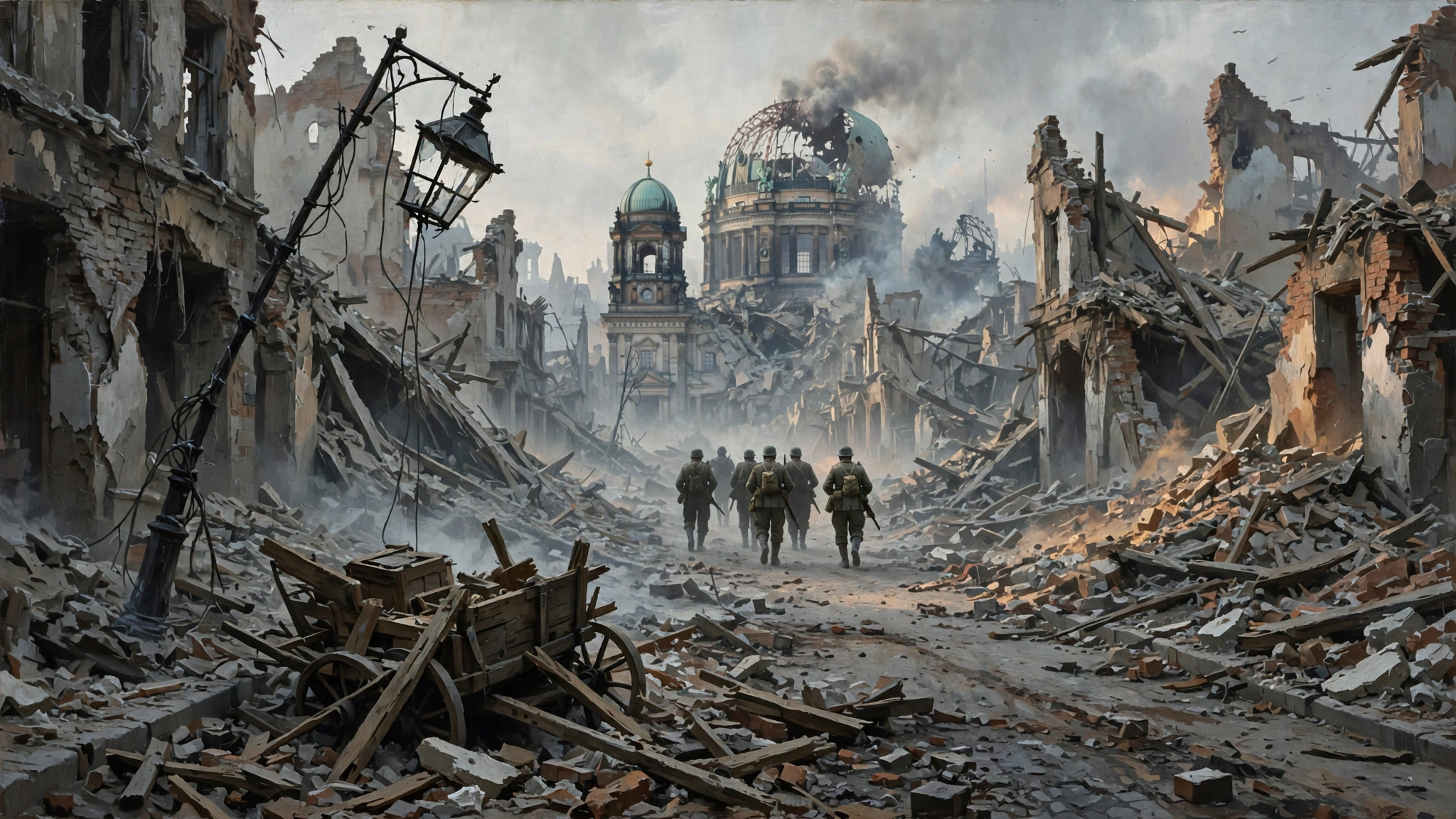
Here's the irony the German generals missed, and it's a big one. The bombing made their job harder. A flat, intact city could have been taken by tanks and aircraft. A city of rubble, collapsed apartment blocks, cratered streets, tangled steel, was a fortress. Translation: rubble can't be bombed twice. And rubble is where tanks go to die. See the problem?
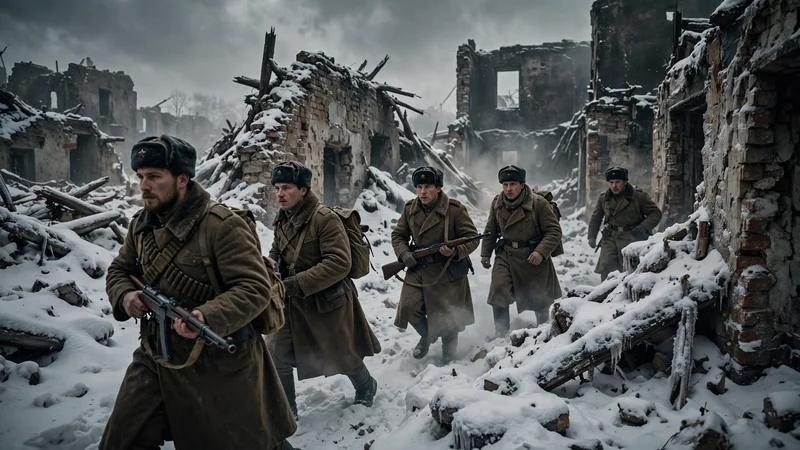
Into this ruin marched General Friedrich Paulus's 6th Army. Some 270,000 men at the start. The pride of the Wehrmacht. A force that had never lost a battle. Waiting for them: the Soviet 62nd Army under Lieutenant General Vasily Chuikov. Chuikov was built for exactly this kind of war. Blunt. Aggressive. Utterly unwilling to yield ground. His answer to German firepower? Order his men to hug the enemy as close as physically possible. So close the Luftwaffe couldn't bomb and the artillery couldn't shell without killing their own men. The Germans had a name for what followed: Rattenkrieg. The war of the rats. Room to room. Floor to floor. Sewer to sewer.
"There is no land for us beyond the Volga." The watchword of the 62nd Army, repeated by Chuikov to every commander who crossed the river. It meant exactly what it said: retreat was not a direction that existed anymore.
The autumn of 1942 produced a roll call of names that still chill the blood. Mamayev Kurgan, the 102-meter burial-mound hill dominating the city center, changed hands at least fourteen times. Rodimtsev's 13th Guards seized it on 16 September at the cost of half the division's fighting strength. German counterattacks retook the summit again and again through October. Veterans wrote that afterward the hill's soil was churned so deep by shells it wouldn't grow grass for years, and Soviet sappers later pulled an estimated 500 unexploded shells per square meter off its slopes. The grain elevator held out for days as a concrete fortress. And in the north, the great factories, the Dzerzhinsky Tractor Plant, the Barrikady gun works, the Red October steelworks, became battlegrounds where workers assembled tanks in one half of a plant while soldiers fought and died in the other. Unpainted, sometimes missing their gun sights, those tanks rolled straight off the line into combat. You couldn't invent that detail. Nobody had to.
And then there was Pavlov's House. You've probably heard the name. The story lives up to it.
On 27 September 1942, Sergeant Yakov Pavlov and three men grabbed a four-story apartment block overlooking 9th January Square. And refused to give it back. Reinforced over the following days to a few dozen men, they turned the building into a fortress. Machine guns in the windows. Anti-tank rifles on the upper floors. Mines in the streets. A trench dug back toward the Volga for supplies. The Germans threw infantry, tanks, artillery, and Stuka dive-bombers at a single apartment building for 58 days, until 25 November. They never took it. German staff maps marked it "Festung": fortress. Chuikov later joked, with only slight exaggeration, that the Germans lost more men trying to take that one building than they'd lost taking Paris.
By mid-November, at staggering cost, the Germans had shoved Chuikov's men back to a few narrow strips of land along the Volga's west bank. Paulus controlled 90 percent of the city. His men could see the river. Victory looked, well, inevitable.
It was a mirage. And if this account stopped at the street fighting, it would miss the entire point. The fighting inside the city was the anvil. The hammer was being forged miles away, in complete secrecy. And the Germans never saw it coming. Not until it landed.
Turning Points: The Trap Springs Shut
This is the hinge of the whole story, so pay attention. Why Stalingrad mattered was decided not in the city. It was decided on its flanks.
The German weak point was obvious to everyone except, apparently, the German high command. Paulus's flanks, those long lines stretching along the Don and the open steppe, weren't held by Germans at all. They were held by Romania's 3rd and 4th Armies, Italy's 8th Army, and Hungary's 2nd Army. Brave men, no question. But short on anti-tank guns, short on armor, and stretched across indefensible ground. Sound like a plan to you? The best German divisions were all inside the city, bleeding for factories. The flanks were guarded by allies Hitler's own staff privately sneered at.
Georgy Zhukov and Aleksandr Vasilevsky, Stalin's two finest operational minds, saw it. Their plan, Operation Uranus, was brutally simple. Let the Germans keep grinding themselves down in the city. Then drive two massive armored pincers through the weak allied flanks and link up behind them. Encirclement. The exact trick the Germans had used on the Russians in 1941, turned right back on them. Poetic, in the grimmest sense.
On 19 November 1942, in fog and snow, the pincers struck. The Romanian lines collapsed in hours. Within four days the two Soviet spearheads met, and the trap snapped shut around the entire German 6th Army, roughly a quarter of a million men, plus tens of thousands of Axis allies. The hunters were now the hunted. Sit with that reversal for a second.
What followed was slow strangulation in the snow, one of the bleakest episodes of the entire war. Göring, with his trademark bluster, promised Hitler the Luftwaffe could supply the trapped army from the air: 500 tons a day. The reality? Closer to 100 tons on a good day. And winter days are rarely good. On some December days barely 20 tons got through. Roughly 490 transport aircraft were lost trying. Air power decided more than supply. The fighters overhead are ranked in our guide to the best fighter plane of WW2. By Christmas the daily bread ration inside the pocket had fallen to about 100 grams per man, and the horses, the army's transport, were being slaughtered for food at a rate of hundreds per day. Men starved in the open steppe. They ate their horses. Then, and the accounts agree on this, the leather of their boots and belts. Frostbite took fingers, then hands, then lives, by the thousand.
Could they have broken out? This is the great argument of Stalingrad, and it deserves a straight answer. Paulus wanted to. His generals wanted to. In mid-December, Field Marshal Erich von Manstein launched Operation Winter Storm, a relief drive that clawed to within about 30 miles of the pocket. Close enough that the trapped men could hear the guns. The door was, briefly, ajar. But Hitler forbade any breakout. Stalingrad was to be held. Retreat was forbidden. Manstein's spearheads, exhausted and outnumbered, were fought to a standstill and driven back. The door slammed shut.
In January the Soviets tightened the noose with Operation Ring. On 30 January 1943, Hitler promoted Paulus to Field Marshal. Sounds like a reward. It wasn't. No German field marshal in history had ever surrendered, and the promotion was an order to put a bullet in his own head. Paulus declined the honor. On 31 January, a Soviet delegation walked into his basement headquarters in the Univermag department store and took his surrender. Paulus, who had never once visited the front line during the entire battle and commanded from his bunker, became the first German field marshal ever taken alive by an enemy. On 2 February, the last resistance in the north ended. The battle was over.
Ninety-one thousand Germans marched into Soviet captivity. Historians estimate only about 6,000 of them ever saw home again. Do the math. Of every fifteen men who surrendered, fourteen never came back. Fourteen.
Aftermath & Legacy: Why It Mattered
So why did it matter? Three shocks. And they bent the rest of the century.
Militarily, start with the butcher's bill. The Axis lost roughly 841,000 men killed, wounded, or captured. An entire field army annihilated. Twenty-two German divisions gone. The Romanian, Italian, and Hungarian armies on the Eastern Front effectively destroyed as fighting forces. The Soviets paid heavier still: over 1.1 million military casualties, plus tens of thousands of civilians.
The Butcher's Bill, by Phase
The two-million figure is an aggregate. Break it down and you see where the blood was actually spilled, and why the encirclement, not the street fighting, was the decisive phase:
- Approach and street fighting (July – November 1942): roughly 500,000 Soviet military casualties and 300,000 Axis, the grinding cost of taking 90 percent of a city.
- Operation Uranus and the encirclement (19–23 November): tens of thousands of Romanian, Italian, and Hungarian troops killed or captured in days as the flanks collapsed.
- The pocket (November 1942 – February 1943): the remaining 6th Army destroyed, about 60,000 German dead in the pocket, 91,000 taken prisoner, of whom only some 6,000 ever returned home.
- Civilians: over 40,000 residents of Stalingrad dead, most in the August bombing and the autumn fighting, a toll often buried beneath the military statistics.
Combined, the battle consumed around two million human beings. The deadliest single battle of the Second World War. The Civil War's Gettysburg holds the equivalent grim title in American history. And the largest and deadliest urban battle in recorded history. Nothing else comes close.
But the numbers, as always, are the least of it. Body counts don't explain why this battle bent the century. Want to know what actually changed? Keep reading.
First, it killed the myth of German invincibility. For three years the Wehrmacht had looked unstoppable: Poland, France, the Balkans, the drive to Moscow's gates. Stalingrad proved a German field army could not merely be stopped but surrounded, starved, and destroyed. The psychological shock rippled through every headquarters in Europe. After February 1943, Germany never launched another major offensive in the east. The long retreat to Berlin had begun. Same imperial overreach that had wrecked Napoleon at Waterloo a century earlier. Different century, same lesson.
Second, it proved the Red Army had learned. Operation Uranus was no human-wave accident. It was a sophisticated double envelopment, planned in total secrecy and executed across hundreds of miles of front. The commanders who designed it, Zhukov, Vasilevsky, Rokossovsky, would spend the next two years dismantling the Wehrmacht piece by piece. Stalingrad was the Red Army's graduation day. And what a brutal school.
Third, it shattered the Axis coalition. Romania, Italy, and Hungary didn't just lose men at Stalingrad. They lost the will to keep bleeding for Berlin. Italy's 8th Army was broken. Hungary's 2nd Army was effectively wiped out along the Don. Romania lost two entire field armies. Within a year, Italy had switched sides. And the aftershock kept spreading: in December 1942, while the 6th Army starved, the Soviets launched Operation Little Saturn against the Italian 8th Army on the Don, wrecking another Axis army and sealing any last hope of relief. The encirclement at Stalingrad wasn't an isolated disaster. It was the first domino. The junior partners learned at Stalingrad that Hitler's wars were fought with their blood.
And here's the part the textbooks sometimes rush past: the civilians. Tens of thousands of residents died. In the August bombing. In the crossfire. Of hunger and cold. Stalingrad is rightly remembered as a military turning point, but it was also one of the war's great civilian catastrophes, a preview of the total war that would soon consume Berlin, Dresden, and Tokyo. In my view, the civilian story is the part of Stalingrad that gets flattened most. It deserves better.
What If It Had Gone the Other Way?
Any serious account has to ask the uncomfortable question. What if Hitler had let Paulus break out in December 1942?
Honestly, here's my take. It wouldn't have won Germany the war. But it might have changed its shape. A breakout, coordinated with Manstein's relief force and abandoning the heavy equipment, could plausibly have saved 100,000 or more veteran German soldiers, the irreplaceable core of the 6th Army. Those men, re-equipped, would have stiffened the whole southern front in 1943. The disaster at Kursk that summer might have played out differently. Or been avoided entirely, traded for a mobile defense that bled the Soviets for years.
But, and this is the part the what-if crowd always skips, Germany's fundamental problem at Stalingrad wasn't manpower. It was oil. And it was a two-front war it could never win. Even a successful breakout leaves the Wehrmacht short of fuel, with American industry arming both the Soviets and the Anglo-Americans, and a strategic bombing campaign about to gut German cities. Stalingrad accelerated the inevitable. It didn't create it. The boldest gamble of the war was Hitler's belief that willpower could substitute for logistics. Stalingrad was where the bill came due.
What the Sources Tell Us (and Where They Argue)
A word on the numbers, because a careful reader should know this. The casualty figures for Stalingrad are among the most debated of the war. Soviet-era sources sometimes inflated German losses and shrank their own. German postwar accounts sometimes did the reverse. The figures here, roughly 1.13 million Soviet military casualties and about 841,000 Axis, reflect the widely cited modern consensus. But historians still argue the margins, especially civilian deaths and the exact strength of the encircled force. We'll never know the precise count. The records of both sides were incomplete. And the steppe keeps its secrets.
What isn't disputed: the dates (17 July 1942 – 2 February 1943), the encirclement (19–23 November 1942), Paulus's surrender (31 January 1943), and the outcome. On those, every serious history agrees.
Sources
- Encyclopaedia Britannica, "Battle of Stalingrad", https://www.britannica.com/event/Battle-of-Stalingrad
- Antony Beevor, Stalingrad (Viking, 1998), the definitive narrative history in English
- David M. Glantz & Jonathan M. House, To the Gates of Stalingrad, Armageddon in Stalingrad, Endgame at Stalingrad (University Press of Kansas), the operational trilogy
- William Craig, Enemy at the Gates: The Battle for Stalingrad (1973), classic account built on veteran interviews
- "Battle of Stalingrad", encyclopedia overview with full order of battle, strength, and casualty tables: http://en.wikipedia.org/wiki/Battle_of_Stalingrad
- HistoryCrunch, "Battle of Stalingrad in World War II: A Detailed Summary": https://historycrunch.com/battle-of-stalingrad-in-world-war-ii/
- WW2 Depot, "Stalingrad: The Battle That Turned the Eastern Front": https://ww2depot.com/blog/stalingrad-battle-turned-eastern-front/