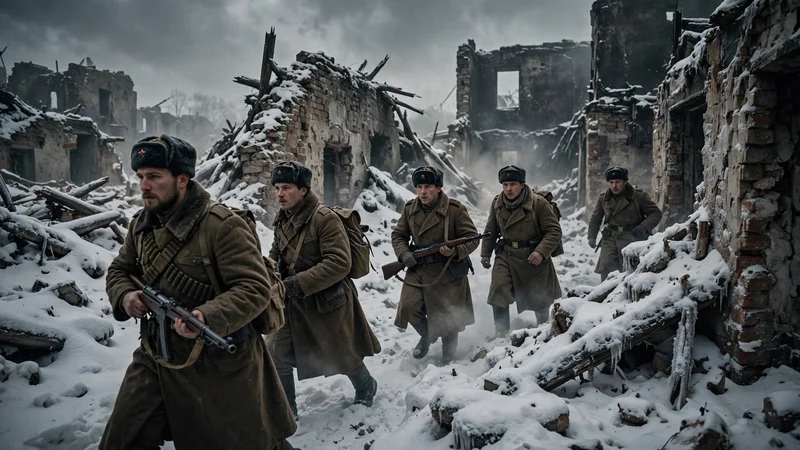
How big can a battle get? Big enough that the men fighting it couldn't see it all — couldn't even imagine it all. At Stalingrad, two million soldiers were locked into a single city and its outskirts for six months, and most of them never saw more than the street they were dying on. That's what "largest battle in history" really means: not a field you can stand on and survey, but a storm of men and metal so vast it swallowed whole armies.
This is our ranking of the largest battles in history — measured by troops involved, both sides combined. A warning before we start: every number below is argued about. Armies counted heads differently, archives burned, and both winners and losers had reasons to bend the figures. We'll give you ranges where historians disagree, and we'll say so plainly. False precision is the enemy here.
How We Rank "Largest"
Three ways people measure a battle's size, and they give different answers. Troops engaged counts every soldier who fought — our pick, because it measures the sheer human mass involved. Casualties measures the cost, which is a different (darker) ranking — our bloodiest battles of WW2 list covers that ground. Duration and area matter too, but a long siege with fewer men (see our longest sieges) is a different kind of bigness.
One more honesty note: "troops engaged" gets fuzzy for battles that lasted months. Did three million men "fight" at the Somme, or did three million rotate through it? Historians count both ways. We've used the standard figures you'll find in most military histories, and flagged where the counting gets creative.
8. Leipzig, 1813 — The Battle of the Nations
When: October 16–19, 1813. Troops: 600,000+. Casualties: ~90,000–120,000.
Before the twentieth century rewrote the scale of war, this was the biggest battle anyone had ever seen — so big they called it the Battle of the Nations. Napoleon, retreating across Germany after the disaster in Russia, made his stand at Leipzig with about 200,000 men. Arrayed against him: a coalition of Russians, Prussians, Austrians, and Swedes numbering well over 400,000.
Four days of fighting across a sprawling battlefield, and it broke him. The French lost, Saxon troops defected mid-battle, and Napoleon began the long retreat to France that would end — temporarily — at Elba. For sheer numbers, nothing in the 1800s came within half of Leipzig. It held the "largest battle" title for a full century, until the industrial slaughter of 1914 arrived.
7. Verdun, 1916 — The Meat Grinder
When: February 21 – December 18, 1916. Troops: ~2,000,000 engaged over ten months. Casualties: ~700,000–800,000.
Verdun wasn't meant to be won — it was meant to bleed. The German chief of staff, Erich von Falkenhayn, picked the historic fortress town of Verdun and attacked it for one stated reason: to "bleed France white." The French, under Philippe Pétain (later a much darker figure in World War II), answered with the vow "Ils ne passeront pas" — they shall not pass.
What followed was ten months of artillery hell across a few square miles. Villages were erased so completely that nine of them were never rebuilt — they're still "villages that died for France" on the map. The French rotated division after division through the sector; by the end, three-quarters of the entire French Army had fought at Verdun. The Germans never took the town. Both sides bled, exactly as Falkenhayn had planned — except Germany bled too.
6. The Somme, 1916 — The Bloodiest Day
When: July 1 – November 18, 1916. Troops: ~3,000,000 rotated through. Casualties: 1,000,000+.
If Verdun was the meat grinder, the Somme was the British Empire's introduction to it. On July 1, 1916 — the first day — the British Army suffered 57,470 casualties, including 19,240 dead. It remains the worst single day in British military history. Men walked, as ordered, into uncut wire and unsuppressed machine guns, because the week-long artillery bombardment was supposed to have destroyed the German defenses. It hadn't.
The battle ground on for four and a half months and gained a few miles of mud. Historians still argue about whether it was worth it — the standard defense is that it relieved pressure on Verdun and wore down the German Army. The standard reply is to point at the casualty lists. Either way, by raw numbers engaged, it belongs on this list.
5. Moscow, 1941–42 — The Tide Turns
When: October 1941 – January 1942. Troops: ~2,000,000+ at peak phases. Casualties: ~1,500,000.
In the autumn of 1941, the German Wehrmacht stood at the gates of Moscow — close enough that forward units could see the Kremlin's spires through binoculars. Operation Typhoon was supposed to finish the Soviet Union before winter. Then three things happened: the mud (rasputitsa), the cold (minus 40 degrees), and Georgy Zhukov.
Stalin had kept fresh Siberian divisions in reserve, and on December 5, 1941, Zhukov threw them at the exhausted, freezing Germans. It was the first major defeat the Wehrmacht suffered in the war, and it ended the myth of German invincibility. The battle sprawled across a vast front and sucked in millions of men — the opening act of the Eastern Front's gigantic scale.
4. Berlin, 1945 — The Last Battle
When: April 16 – May 2, 1945. Troops: ~2,500,000 Soviet + ~1,000,000 German. Casualties: ~1,000,000 (including 100,000+ civilians, a figure still disputed).
The largest battle ever fought in and around a single city. Zhukov and Konev raced each other to Berlin with two and a half million Soviet troops, thousands of tanks, and more artillery than had ever been assembled. Inside: a million German defenders — many of them old men, boys, and foreign volunteers — fighting block by block through the rubble.
It ended, as everyone knew it would, with Hitler's suicide on April 30 and the city's surrender on May 2. The scale is hard to grasp: in two weeks, more men fought over Berlin than fought in the entire American Civil War. The civilian cost — still argued over — is the battle's darkest shadow.
3. Kursk, 1943 — The Greatest Tank Battle
When: July 5 – August 23, 1943. Troops: ~2,000,000 Soviet + ~900,000 German. Casualties: ~1,200,000.
By combined troop count, Kursk may actually be the largest single battle ever fought — nearly three million men. The Germans, under Manstein, hurled their new Panther and Tiger tanks at a Soviet salient the Red Army had spent months fortifying: minefields eight deep, anti-tank guns layered like scales, reserves stacked behind reserves.
On July 12 came Prokhorovka — hundreds of tanks colliding in a swirling armored brawl that remains the largest tank engagement in history (our full Kursk guide covers it in detail). The German offensive broke. From that summer on, Germany never again held the strategic initiative in the East. Kursk is where the Wehrmacht's back broke — Stalingrad was where its heart stopped.
2. Operation Bagration, 1944 — The Forgotten Giant
When: June 22 – August 19, 1944. Troops: ~2,300,000 Soviet + ~800,000 German. Casualties: ~1,000,000.
Ask most Western readers about the summer of 1944 and they'll say Normandy. But while the Allies fought through the Norman hedgerows, the Soviets launched something even bigger: Operation Bagration, named for a Napoleonic-era Russian general. In two months it destroyed Germany's entire Army Group Centre — 28 divisions wiped off the map — and drove the front line 600 kilometers west.
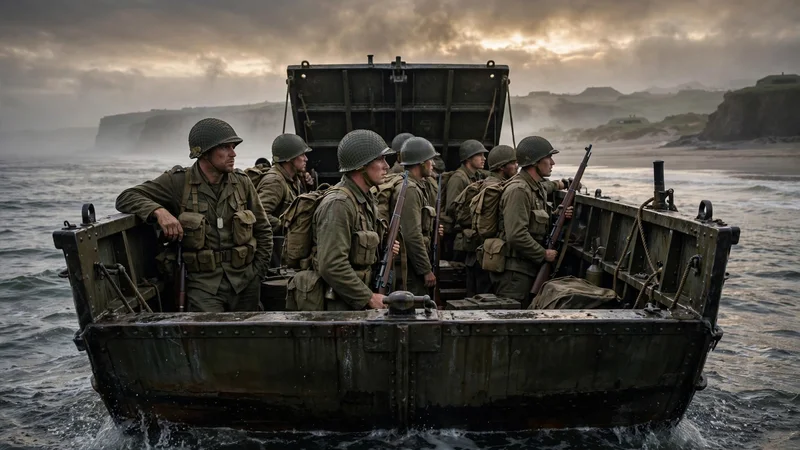
By troop count it dwarfs D-Day (our D-Day guide puts that landing in perspective). Yet Bagration is barely remembered in the West — a reminder that "largest" and "most famous" are very different things.
1. Stalingrad, 1942–43 — The Largest of Them All
When: August 23, 1942 – February 2, 1943. Troops: ~2,000,000. Casualties: ~2,000,000 (disputed).
Six months. One city. Two million soldiers, two million casualties — the numbers are so round because nobody truly knows them. What we know: Hitler wanted the city that bore Stalin's name; Stalin forbade retreat; General Chuikov's 62nd Army held a strip of rubble along the Volga sometimes only a few hundred yards deep; and in November, Zhukov's Operation Uranus closed the trap, encircling 300,000 Axis troops.
When Field Marshal Paulus surrendered in February 1943 — the first German field marshal ever taken alive — it broke something in the German war effort that never healed. Stalingrad is our full guide's subject, and it earns the top spot here: not just for the troop count, but because no battle concentrated so many men, so much suffering, and so much consequence into one place.
The numbers will always be argued. The scale doesn't need arguing — nothing before or since has matched it.
Why World War II Owns This List
Five of our eight entries come from 1941–45. That's not a coincidence — it's industrialization. Only a twentieth-century state could feed, move, and arm millions of men at once: railways, trucks, radios, and factories working around the clock. Napoleon moved 600,000 men to Leipzig and it nearly broke his empire's logistics. Eighty years later, Germany and the Soviet Union did that five times over, simultaneously, for four years.
Ancient battles could feel enormous to the men in them — at Issus, Alexander's 40,000 faced a Persian host the ancient sources put at 250,000 (modern historians say far fewer). But the ancient world's "huge" armies were tens of thousands. The modern world's are millions. When someone tells you Cannae or Gaugamela was "the largest battle ever," smile politely and show them this list.
FAQ
What is the largest battle in history?
By troops engaged, the Battle of Stalingrad (1942–43) is the most commonly cited answer — roughly two million soldiers fought in and around the city. Some historians give the nod to Kursk (1943), where combined forces approached three million. The honest answer: it depends how you count, and the numbers are disputed.
How many soldiers fought at Stalingrad?
Approximately two million personnel took part over the six-month battle. Casualties were around two million total — though Soviet and German sources disagree sharply on the breakdown, and the true figure will never be known exactly.
Was Kursk bigger than Stalingrad?
In raw troop numbers, probably yes — about two million Soviet troops faced roughly 900,000 Germans at Kursk, the largest tank battle ever fought. But Stalingrad lasted longer, cost more lives, and is usually ranked first because of its scale and significance combined.
What was the largest battle of World War I?
The Battle of the Somme (1916) engaged around three million men over its four and a half months — though not all at once. For a single sustained clash, Verdun (1916) is its grim twin, with some 700,000–800,000 casualties.
What was the largest battle before the 1900s?
The Battle of Leipzig in 1813 — the "Battle of the Nations" — involved more than 600,000 troops from half a dozen nations. Nothing before the industrial age came close.
Why do casualty numbers for these battles vary so much?
Armies counted differently, records were destroyed, propaganda inflated or shrank figures, and "casualties" can mean killed, wounded, missing, or captured depending on the source. Treat any single exact number with suspicion — ranges are more honest.
For the costliest fighting of the Second World War, see our bloodiest WW2 battles ranked — and for the single biggest clash of armor, the largest tank battle in history.
Sources
- Antony Beevor, Stalingrad (Viking, 1998) — the standard modern account; casualty analysis.
- David Glantz & Jonathan House, When Titans Clashed (University Press of Kansas, 1995) — Eastern Front force strengths.
- Martin Gilbert, The Somme: Heroism and Horror in the First World War (Henry Holt, 2006).
- Firstpost — "Top 10 deadliest World War II battles" (casualty table cross-check).