Most sieges are sprints. A few are marathons. And a handful are something else entirely — slow-motion disasters measured not in days but in decades, where children were born inside the walls and grew old enough to fight on them. What keeps a siege going for twenty years? Sometimes it's the sea. Sometimes it's pride. Sometimes both sides simply forget how to stop. Here are the longest sieges in history, ranked — and the strange reasons each one refused to end.
What Makes a Siege Last?
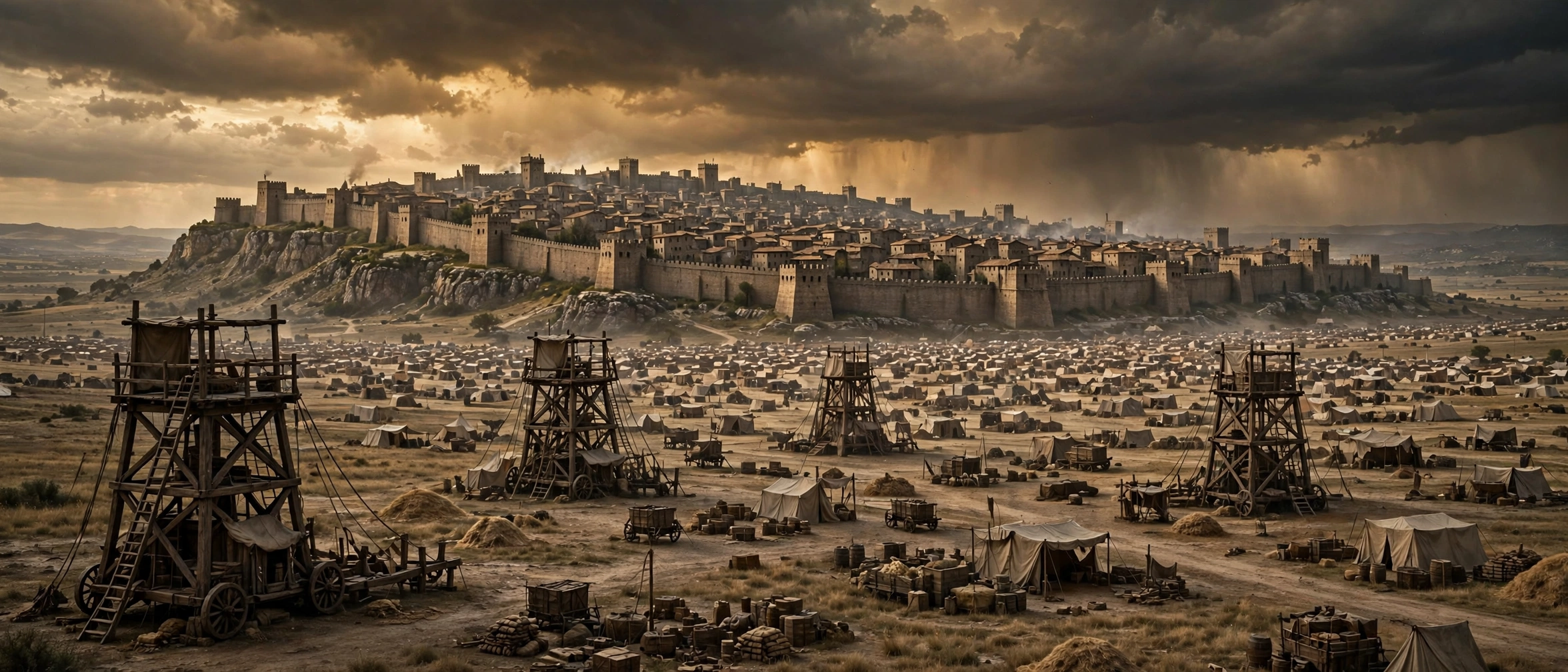
Before the ranking, a quick word on mechanics — because the pattern repeats in every entry below. A siege ends when one side can't go on. The attacker runs out of supplies, money, or political patience. The defender runs out of food. So a siege lasts for years only when both sides can keep going: the defender gets supplied (usually by sea, which is brutally hard to blockade completely), and the attacker has reasons to stay that outweigh the cost of leaving.
Keep that in mind. You'll see the sea save city after city in the list below. You'll also see pride — the refusal to be the general who gave up — stretch a hopeless investment across decades. Now, the ranking.
1. Siege of Ceuta (1694–1727) — 33 Years
The longest siege in recorded history wasn't in ancient times. It was early modern, it was in North Africa, and almost nobody has heard of it.
Ceuta is a Spanish city on the Moroccan coast, guarding the Strait of Gibraltar. In 1694, Sultan Moulay Ismail of Morocco — a ruler famous for grandiose palaces and an inexhaustible appetite for war — decided to take it. His forces invested the city on October 23, 1694. They were still there, on and off, in 1727. Thirty-three years. A child born the year the siege began would have been old enough to command troops by the year it ended.
Why did it last so long? The sea. Ceuta is a peninsula fortress; as long as Spanish ships could reach it, the garrison could eat. The Moroccans could blockade the landward side all they liked — and they did, in two long phases (1694–1720 and 1721–1727) — but they could never quite close the water. Spain, for its part, treated Ceuta as a point of honor and kept the garrison supplied.
The result: a Spanish victory by sheer endurance. When the siege finally lifted in April 1727, the city was still Spanish. It still is.
2. Siege of Azotus (659–630 BC) — 29 Years
Second place comes with an asterisk the size of a pyramid. The Greek historian Herodotus — writing a couple of centuries after the fact, and not always the most reliable witness — claims that Pharaoh Psamtik I of Egypt besieged the Philistine city of Azotus (Ashdod) for 29 years, from 659 to 630 BC.
Should you believe it? Historians argue. Herodotus loved a good long number, and no Egyptian record confirms the figure. But even the skeptics admit something real sits behind the story: Egypt's slow, grinding expansion into the Levant in the 7th century BC, city by city, year by year. If the 29-year figure is exaggerated, the underlying truth — that ancient sieges could drag on for a generation — is solid enough. Treat this one as "reported by Herodotus," and enjoy the idea of a siege so long that the besiegers probably needed to rotate entire generations of troops.
3. Siege of Candia (1648–1669) — 21 Years
If Ceuta is the longest siege nobody knows, Candia is the most expensive one nobody knows. Twenty-one years, four months — May 1648 to September 1669 — of Ottoman assault against the Venetian fortress-city of Candia on Crete (modern Heraklion).
The war started the way so many Ottoman-Venetian wars started: with an incident at sea. In 1644, the Knights of Malta seized an Ottoman convoy; the Sultan blamed Venice and decided to take Crete, Venice's richest island possession. Ottoman armies overran the island fast — but Candia, with its seven great bastions, wouldn't fall. So they settled in. And settled. And settled.
What followed was the early modern age's most grinding siege: mines and countermines honeycombing the ground beneath the walls, naval battles in the Aegean as Venice tried to starve the besiegers by cutting their sea supply, French relief expeditions that ended in disaster (their flagship Thérèse blew up in 1669). The butcher's bill was staggering — Venetian reports put Ottoman losses near 119,000 men against some 31,000 Venetian dead. When the Venetian commander Francesco Morosini finally surrendered on honorable terms in September 1669, his garrison marched out with flags flying.
The Ottomans won Crete. But the cost helped hollow out the empire — historians link the exhaustion of Candia to Ottoman decline in the decades that followed. Sometimes the winner loses too.
4. Siege of Ishiyama Honganji (1570–1580) — 10 Years
Half a world away, Japan's most stubborn siege was a war of religion. The fortress-temple of Ishiyama Honganji, headquarters of the Ikko-ikki — militant Buddhist warrior monks — defied Oda Nobunaga, the warlord unifying Japan, for a full decade.
This wasn't a normal siege. The Honganji was less a castle than a fortified city, supplied by sea through sympathetic merchants, defended by tens of thousands of fanatical believers. Nobunaga — brilliant, ruthless, and not a man accustomed to being told no — threw everything at it for ten years. He finally won in 1580, not by storming the place but by cutting its sea supply and negotiating a surrender. The monks walked out. Nobunaga burned the temple to make his point.
Ten years against the most feared warlord in Japanese history. Not bad for monks.
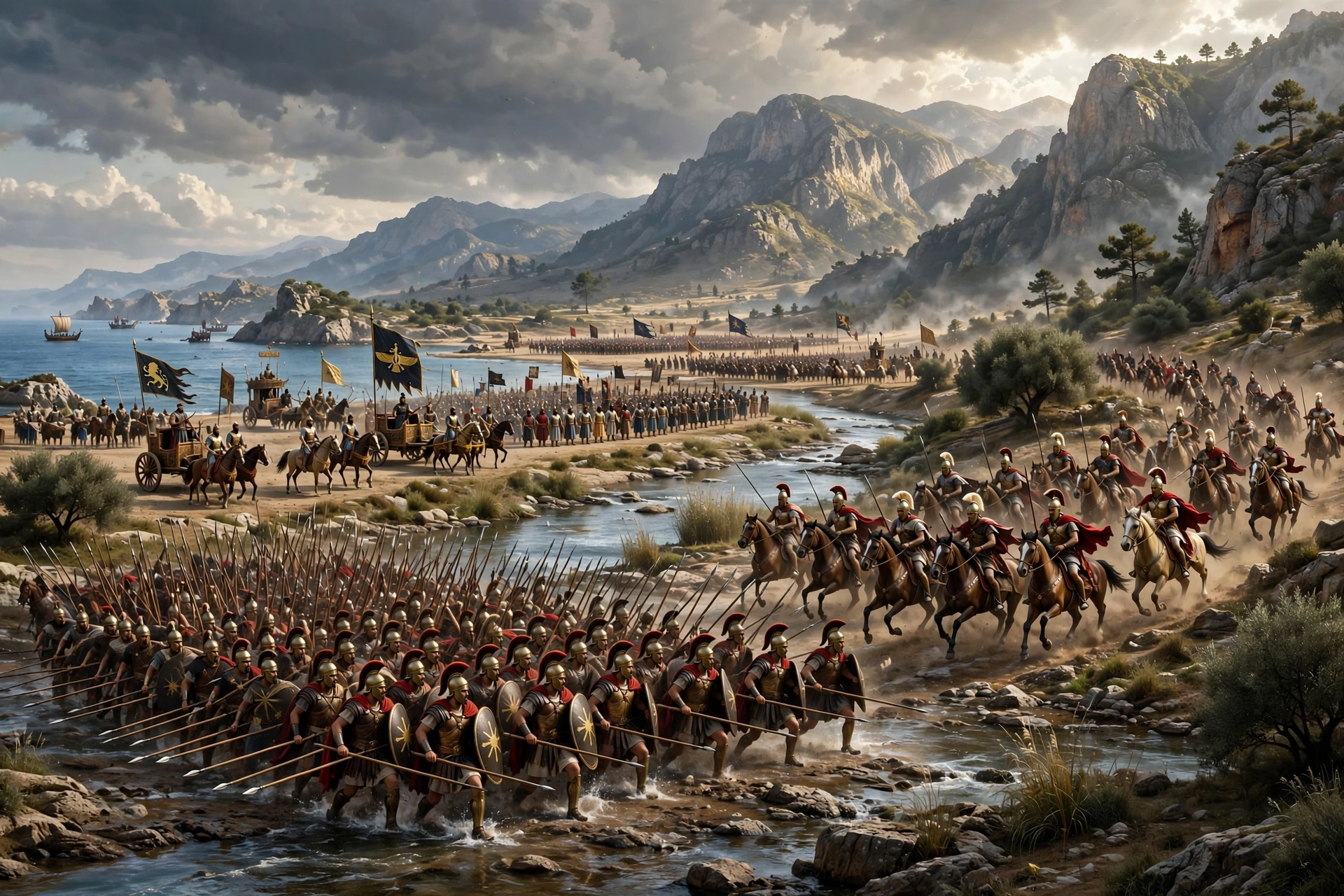
5. Siege of Troy (c. 1194–1184 BC) — 10 Years
Yes, this one is legend — Homer's Iliad, the wooden horse, Achilles and Hector. No archaeologist will certify a ten-year siege at Troy. But the story belongs on this list for a different reason: it's the idea of the decade-long siege, the one every later generation measured itself against.
Was there a real war behind the myth? Probably — the ruins at Hisarlik in Turkey show a city destroyed by violence around the right era, and Hittite records mention a place called Wilusa that looks a lot like Troy. Whether it lasted ten years or ten weeks, the Greeks who told the story understood something true about sieges: a walled city with a harbor can hold out almost indefinitely, and the besieger's real enemy is time. Homer just gave that truth heroes and gods.
6. Siege of Sarajevo (1992–1996) — 1,425 Days
The longest siege of a capital city in modern warfare — and the only one on this list within living memory. From April 1992 to February 1996, Bosnian Serb forces ringed Sarajevo in the hills and shelled it, while the city's defenders and civilians endured nearly four years of snipers, shelling, and hunger.
1,425 days. The numbers are grim and well documented: over 11,000 dead, including more than 1,600 children. Sarajevo's airport became a lifeline under UN control; a hand-dug tunnel under the runway — the "Tunnel of Hope" — smuggled in food and arms. The siege finally ended with the Dayton Accords in late 1995 and the lifting of the blockade in February 1996.
Sarajevo earns its place here not for length alone but for what it proved: that even in the age of television, satellites, and international diplomacy, a city could still be starved in full view of the world — and hold out anyway.
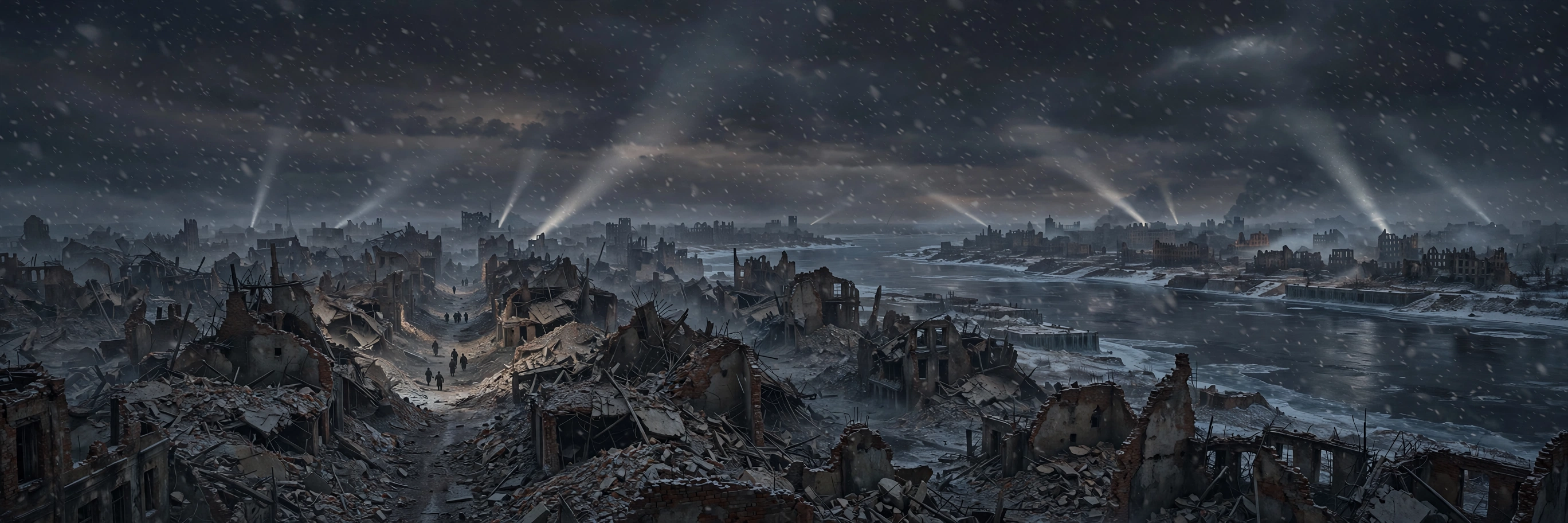
7. Siege of Leningrad (1941–1944) — 872 Days
Shortest on this list by the calendar. Deadliest by a distance that isn't close.
When German and Finnish forces encircled Leningrad in September 1941, they didn't plan to storm it. Hitler's directive was explicit: starve it out. For 872 days — until January 27, 1944 — three million people were trapped in a city with no reliable food supply, through two of the coldest winters of the century. The "Road of Life" across frozen Lake Ladoga kept a trickle of supplies moving, but never enough. At least 750,000 civilians starved to death; total deaths from all causes exceeded a million — roughly four times the civilian dead of both atomic bombings combined.
And yet the city never surrendered. Factories kept producing shells while workers collapsed at their lathes. Shostakovich's Seventh Symphony premiered in the besieged city in August 1942, broadcast to both the defenders and the German lines. When the siege finally broke, Leningrad had become the Soviet Union's supreme symbol of endurance — which is exactly why it's last on a list ranked by duration and first on any list ranked by cost.
For the full story of the Eastern Front's other great crucible, see our guide to Stalingrad — the battle that broke the German army while Leningrad held the line.
FAQ
What was the longest siege in history?
The Siege of Ceuta (1694–1727) — about 33 years of Moroccan blockade against the Spanish-held city in North Africa. Ceuta survived because Spanish ships kept the garrison supplied by sea.
How long was the Siege of Leningrad?
872 days, from September 1941 to January 27, 1944. At least 750,000 civilians starved to death; total deaths from all causes exceeded a million — the deadliest siege in history.
What was the longest siege in ancient history?
By the ancient sources, the Siege of Azotus — 29 years, claimed by Herodotus for Pharaoh Psamtik I’s investment of the Philistine city around 659–630 BC. Modern historians treat the figure with skepticism, but the campaign behind it was real.
Why do some sieges last for years?
Two conditions have to hold at once: the defender must be resupplied (usually by sea, which is brutally hard to blockade) and the attacker must have reasons to stay that outweigh the cost of leaving — pride, politics, or nowhere else to go.
Was the ten-year Siege of Troy real?
The Iliad’s version is legend, but there is likely a historical kernel — the ruins at Hisarlik in Turkey show a city destroyed by violence in roughly the right era, and Hittite records mention a place called Wilusa that resembles Troy.
How long was the Siege of Sarajevo?
1,425 days, from April 1992 to February 1996 — the longest siege of a capital city in modern warfare, with over 11,000 killed.
Siege warfare didn’t end with the age of stone walls. Our guide to the Battle of Vicksburg covers a 47-day Civil War siege decided by starvation, and the aftermath of the Battle of Issus includes Alexander’s brutal seven-month siege of Tyre. For the twentieth century’s fortified slaughterhouses, see D-Day — the assault on Hitler’s Atlantic Wall — and Mogadishu 1993, urban combat at its most desperate.
Sources
- Herodotus, The Histories, Book II — the 29-year siege of Azotus claim.
- Kenneth M. Setton, Venice, Austria, and the Turks in the Seventeenth Century — the Cretan War and Candia.
- U.S. Holocaust Memorial Museum / encyclopedia sources on the Siege of Leningrad timeline and death toll.
- UN / ICTY records on the Siege of Sarajevo (1992–1996).
- Stephen Turnbull, Japanese Fortified Temples and Monasteries AD 710–1062 — Ishiyama Honganji.