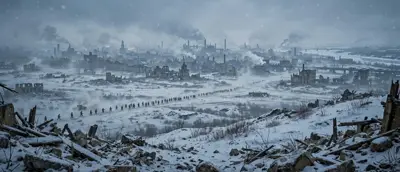
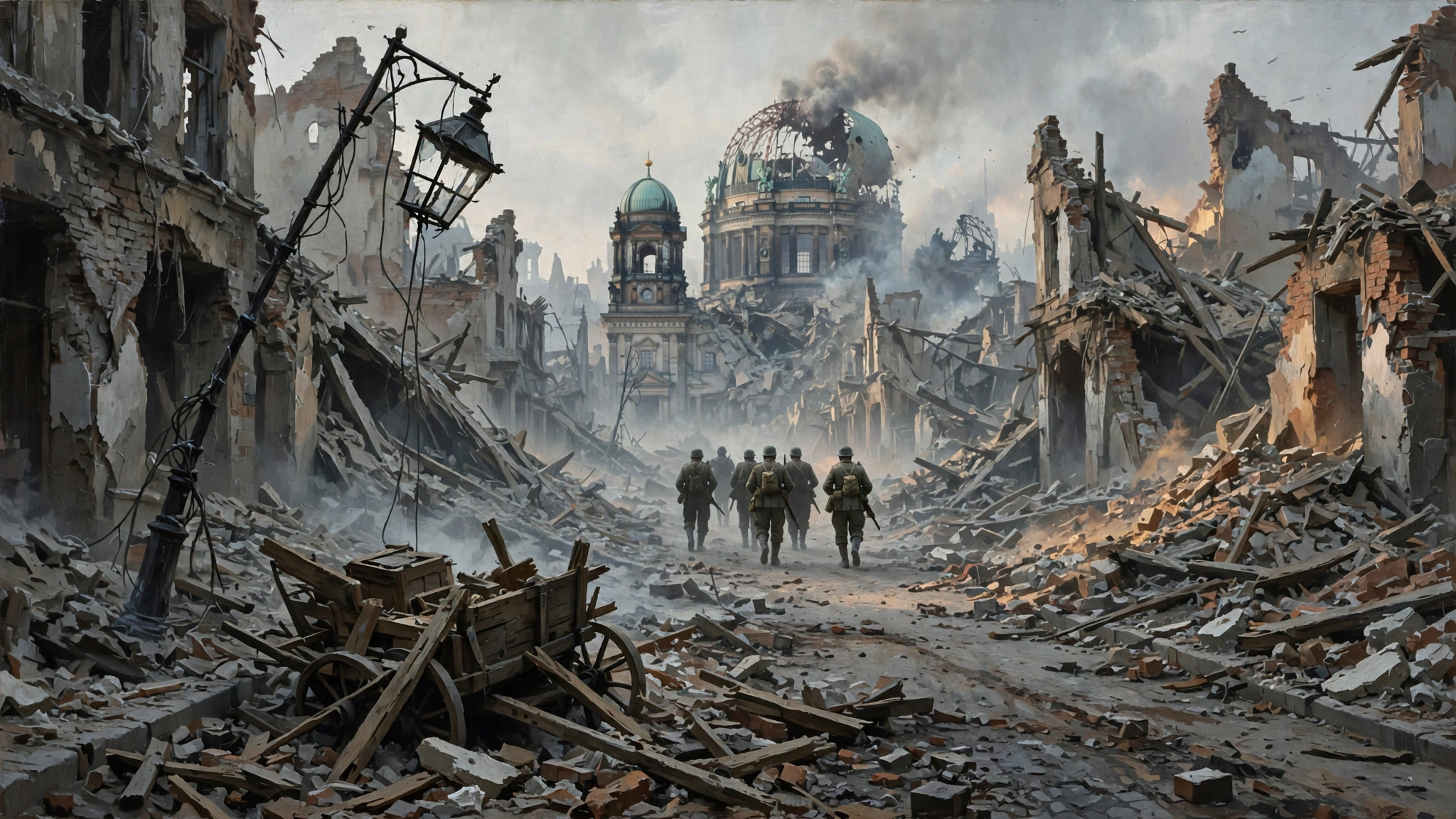
On June 22, 1944, the Red Army did something the German army had spent three years insisting was impossible. It destroyed an entire German army group. Not defeated it or pushed it back. Destroyed it. In five weeks, Army Group Centre, the force holding the middle of the Eastern Front, simply stopped existing as a fighting formation. Twenty-eight divisions gone. Around 450,000 men killed, wounded, or captured. And the worst part for Berlin? Most people in the West have never even heard of it.
Why Did the Germans Never See It Coming?
By the spring of 1944, the Germans knew a big Soviet offensive was coming. They just knew it would come somewhere else. That was the whole trick. The Soviet high command, the Stavka, spent months building a fake army in the south, in Ukraine. Dummy tanks. Fake radio traffic. Real troops marching in circles to be seen. German intelligence took the bait. They moved their armor south and waited for the blow to fall on Lvov. It never came.
So what was Operation Bagration, exactly? It was the Soviet Union's summer offensive of 1944, launched on June 22 against German Army Group Centre in Belarus. In about five weeks, the Red Army destroyed 28 German divisions, retook Minsk, advanced 600 kilometres to the Vistula River, and inflicted the largest single defeat in German military history.
The name came from Stalin himself. He picked Pyotr Bagration, a Georgian prince who had served as a Russian general and died of wounds after Borodino in 1812. It was a pointed choice. The last time a foreign army had marched deep into Russia, Bagration had helped stop it. Now his name would go on the operation that carried the war back to Germany's doorstep.
The date was no accident either. June 22, 1944 was exactly three years after Operation Barbarossa, the day Germany invaded the Soviet Union. The Stavka wanted the symbolism. They also wanted the weather: long summer days, dry ground, and enough daylight for round-the-clock air support. Everything about the opening was planned down to the hour. The Germans, meanwhile, were looking the wrong way. That's how you lose an army group.
Then there were the partisans. In the nights before the attack, Belarusian partisans blew up rail lines in more than 10,000 places across the German rear. Trains stopped. Supplies stopped. Reinforcements that were supposed to rush to the front sat in sidings waiting for track repairs that never came. When the guns opened up on June 22, Army Group Centre was already half cut off from its own supply lines. Clever? Yes. But it only worked because the Germans had spent three years treating Belarus as conquered ground instead of hostile territory. That was their mistake, and they paid for it in full.
Who Was Actually There? The Armies at Bagration
The numbers here are almost silly. The Soviets attacked with four Fronts, the Russian word for army groups, under two of the most feared names in the Red Army. Georgy Zhukov and Aleksandr Vasilevsky ran the operation from Stavka headquarters. On the ground, Ivan Bagramyan led the 1st Baltic Front in the north, Ivan Chernyakhovsky the 3rd Belorussian Front, Georgy Zakharov the 2nd Belorussian Front, and Konstantin Rokossovsky the 1st Belorussian Front in the south. Four fronts, twenty combined-arms armies, two tank armies, five air armies. In total, about 2.4 million Soviet troops, with 5,200 tanks and self-propelled guns, 36,400 guns and mortars, and 5,300 aircraft.
Facing them stood Army Group Centre, commanded by Field Marshal Ernst Busch. On paper it held a front nearly 1,000 kilometres long across Belarus. In reality it had about 850,000 men, and only around 486,000 of them were combat troops. Its armor was thin: 118 tanks and 452 assault guns on the day the attack began. Its air support was thinner: about 920 aircraft against nearly 8,000 Soviet planes. The Germans were outnumbered more than two to one in men, ten to one in tanks, and eight to one in the air. Their best divisions had been sent south, to wait for an attack that was never going to come.
Honestly, the mismatch is the story. This was not a fair fight, and the Soviets had worked hard to make sure it never would be. Every trick in the book went into the buildup: fake concentrations in the south, radio silence in the center, troops moved only at night, and front-line units ordered to dig in and look defensive. German reconnaissance flights saw exactly what Moscow wanted them to see. If you want one lesson from Bagration, it is this one. Wars are often won before the first shot, by the side that controls what the enemy believes.
One more number, because it tells you how seriously the Soviets took this. The opening barrage came from more than 32,000 guns, rocket launchers, and mortars. The Red Army of 1944 wasn't the clumsy force of 1941. It had learned. On June 22, it was about to show its work.
June 22, 1944: The Day the Front Collapsed
The attack opened at dawn on June 22, 1944, with an artillery barrage that buried the German front-line positions. Then the infantry went in, and behind them the tanks. The plan was simple on paper and brutal in practice: break through on both flanks, north at Vitebsk and south at Bobruisk, and close the pincers around Minsk, trapping the German 4th and 9th Armies between them.
Vitebsk fell first. By June 27, Soviet troops from the 1st Baltic and 3rd Belorussian Fronts had encircled five German divisions in the city. The German garrison fought to the end, as Hitler had ordered, and was destroyed as a fighting force. A few thousand men slipped out through the forests. The rest were killed or captured. Orsha and Mogilev followed in the same week. The German line, which had held for months, came apart in days. Have you ever wondered what a front collapsing actually looks like? It looks like this. Orders that arrive too late. Units that stop answering their radios. Roads jammed with retreating columns that Soviet aircraft pick apart from above.
In the south, Rokossovsky's 1st Belorussian Front did the same thing at Bobruisk. By June 29, about 70,000 German troops were trapped in a pocket around the city. Most surrendered that same day. The rest were killed trying to break out. Bobruisk had been a German strongpoint for three years. It lasted five days.
In Berlin, the scale of the disaster took days to sink in. On June 28, Hitler sacked Busch and handed Army Group Centre to Walter Model, his best defensive general, the man they called the Fuhrer's fireman. Model rushed in with what reserves he could find, and he did slow the Soviet advance in places. But there was nothing left to save. The front was gone. The army group was a name on a map with no divisions behind it. Model was handed a fire hose and told to put out a flood.
The speed of it still shocks historians. In one week, the Red Army advanced up to 150 kilometres in places, farther than the Germans had advanced in the first week of Barbarossa. The hunters had become the hunted, and the hunters were very, very good at it by now.
Minsk: The Pocket That Swallowed an Army
The pincers closed on July 3, when Soviet mobile groups from the north and the south met east of Minsk and retook the Belarusian capital. Around 100,000 German troops were trapped inside the pocket: the remains of the 4th and 9th Armies, the core of Army Group Centre. For the next eight days, they tried to break out. Some small groups got through the forests. Most did not. On July 11, the last 35,000 men of the 4th Army surrendered. The pocket was empty.
Two weeks later, Moscow staged a parade. On July 17, 1944, some 57,600 German prisoners were marched through the streets of the Soviet capital, in columns, under guard, past crowds that had come to watch. The Soviets called it the Parade of the Defeated. It was propaganda, sure, but it was propaganda with a point. Three years after German troops had stood at the gates of Moscow, German prisoners were being marched through it. The war had turned, and everyone could see it now.
Minsk mattered for another reason. It was the capital of Belarus, and its fall meant the whole of Belarus was coming back under Soviet control. The partisans came out of the forests. The civil administration followed the tanks. The Red Army didn't stop. It couldn't stop. The plan called for pursuit, and pursuit meant keeping the Germans running until they hit the Vistula.
The Race to the Vistula, and the Halt at Warsaw
July was a blur. Vilnius fell on July 13. Lublin, in Poland, on July 24. Brest on July 28. Kaunas on August 1. In five weeks, the Red Army had advanced about 600 kilometres, roughly the distance from London to Edinburgh, and reached the Vistula River, the last great water barrier before Warsaw. Soviet tanks established bridgeheads at Magnuszew and Pulawy, south of the Polish capital, and dug in.
And then they stopped. On August 1, 1944, the Polish Home Army rose up in Warsaw, expecting the Red Army to arrive within days. It didn't arrive. Soviet troops sat on the east bank of the Vistula, in the suburb of Praga, while the Germans crushed the uprising over the next two months. About 200,000 Poles died. The question of why the Soviets stopped is still argued today, and it is the ugliest argument in the history of this operation.
Here is the honest version. Both explanations are partly true. The Soviet spearheads really were exhausted. They had advanced 600 kilometres in five weeks, outrunning their supply lines, losing tanks to breakdowns faster than to enemy fire, and fighting with units that were down to half strength. A jump across the Vistula into a defended city, against fresh German divisions rushed in from the west, would have been a gamble. It's also true that Stalin had no love for the Polish Home Army, which answered to the London-based Polish government he intended to replace. A Warsaw freed by the Home Army would have been a political problem. A Warsaw freed by the Red Army, later, wouldn't. So the Soviets waited. And Warsaw burned.
That's the downside nobody should skip. Bagration was a military masterpiece and a moral mess at the same time. The same operation that freed Belarus left Warsaw to die. History rarely hands you clean stories. This one isn't clean at all.
What Did It Cost? The Butcher's Bill
The German losses were staggering. Historians David Glantz and Jonathan House put them at around 450,000 men killed, wounded, or captured. Other counts run higher: Soviet sources claim 539,480, while the German military historian Karl-Heinz Frieser counts 399,102. Whichever figure you trust, the shape is the same. Twenty-eight German divisions were destroyed outright. About fifty more were reduced to half strength or less. Army Group Centre lost some 2,000 tanks and assault guns, and its air force in the east was gutted.
The Soviet cost was heavy too, and honest histories say so. Glantz and House count about 770,888 Soviet casualties, including some 180,000 killed or missing, plus 2,957 tanks and self-propelled guns lost. That's a terrible price. It's also something rare on the Eastern Front: a major Soviet offensive in which the Germans lost far more men than the attackers. In most of the great battles of the east, from Stalingrad to Kursk, Soviet losses were higher. Bagration flipped the ratio. That tells you how completely the Germans were outfought.
One more comparison, because it puts the scale in perspective. During the same summer, the Germans lost about 200,000 men in Normandy. Bagration cost them more than twice that. The Western Front got the headlines. The Eastern Front did most of the killing. That has been true of the whole war, but in the summer of 1944 it was true in a way that is hard to overstate.
Why Bagration Still Matters (and Why You Have Never Heard of It)
Start with the military result. Bagration destroyed the strongest German force in the east and opened the road to Warsaw, East Prussia, and Berlin. It also cut off Army Group North, leaving some 300,000 German soldiers trapped in the Courland Pocket in Latvia, where they sat out the rest of the war, useless. It forced Germany to fight a real two-front war for the first time since 1941, with the Allies pressing in Normandy and the Soviets smashing through Belarus at the same time. Germany didn't have the men for both fronts. It never did again.
So why is D-Day a household name and Bagration a trivia question? Part of it is simple geography. Western audiences learn Western battles. Part of it is that the Soviets, for their own reasons, publicized their victories far less in the West than the Allies did theirs. Part of it is that Bagration has no single dramatic day to hang a movie on. It was five weeks of methodical destruction, not one morning on a beach. But here is the thing. D-Day put about 156,000 Allied troops ashore on June 6. Bagration threw about 2.4 million Soviet troops at the Germans sixteen days later. Bigger army. Bigger losses inflicted. Bigger consequences. If you only know one of them, you only know half the summer of 1944.
That is why this operation deserves its own page. Not as a footnote to Normandy, but as the main event it was. The war in Europe was won on the Eastern Front, and Bagration was the blow that broke the German army's back. Everything after it, from the Vistula to the Oder to Berlin, was the Red Army walking through a door this operation had kicked open.
A Note on the Numbers: What the Sources Actually Say
The figures in this article come from the standard sources, and they don't all agree. German losses run from about 399,000 (Frieser) to about 450,000 (Glantz and House) to over 539,000 (Soviet official sources). Soviet losses are usually given as about 770,888 total, with some 180,000 killed or missing. Even the end date is argued: most Western histories end the operation on August 19, 1944, while some Russian sources run it to August 29. The dates, the commanders, the destruction of 28 divisions, and the fall of Minsk on July 3 aren't in dispute. The rest is rounding, and any honest account says so.
3 Lessons from Bagration
1. Deception is a weapon, not a trick. The Soviets did not just outnumber the Germans. They out-thought them. Months of fake buildups, radio silence, and night marches meant the Germans put their armor in the wrong place and waited for an attack that never came. If you control what the enemy believes, you have already won half the battle before it starts.
2. Concentration beats courage. The Germans fought hard at Vitebsk and Bobruisk. It didn't matter. The Soviets put overwhelming force on narrow breakthrough sectors, punched through, and let their mobile groups run free in the German rear. Bravery can't fix a ten-to-one disadvantage in tanks. Plan for the numbers, not for the heroics.
3. Supply lines set the limit of victory. Bagration ended at the Vistula not because the Germans stopped the Red Army, but because the Red Army outran its own supply lines. The advance covered 600 kilometres in five weeks, and at the end of it the tanks were running on empty. Every offensive has a culminating point. The generals who forget that end up like the Germans at Moscow in 1941, and the Soviets at Warsaw in 1944. Know where your reach ends.
If you want to see what came next, our Battle of the Bulge summary picks up the story in the west, where a desperate Germany gambled its last reserves, and our Kursk guide shows the battle a year earlier that broke the German offensive power Bagration then finished off. The road from Minsk to Berlin was still long. After the summer of 1944, nobody doubted which way it ran.
Sources
- Wikipedia, Operation Bagration
- WarHistory.org, Bagration Operation
- WW2DB, Operation Bagration
- David M. Glantz and Jonathan M. House, When Titans Clashed: How the Red Army Stopped Hitler (University Press of Kansas, 1995; revised edition 2015)