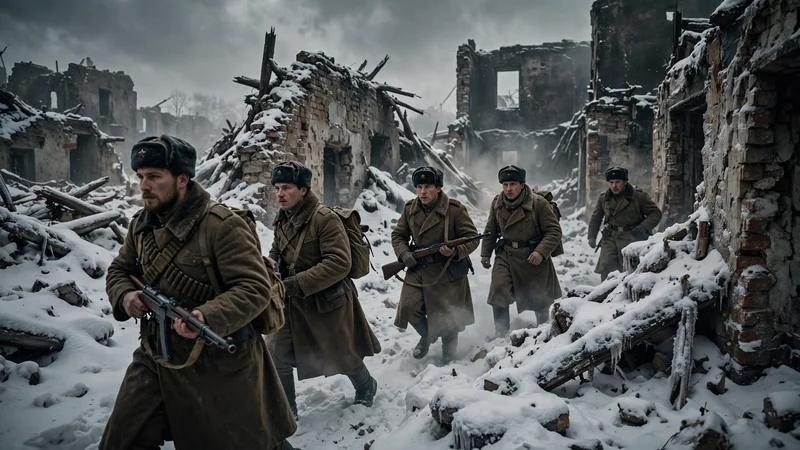
The summer of 1943 gave the world the biggest tank battle ever fought, and it opened with the most predictable attack plan of the war. On the morning of July 5, Germany hurled roughly 780,000 men and nearly 3,000 tanks at a bulge in the Russian front, from the north and the south, aiming to pinch the bulge shut and destroy the armies inside it. The Soviets knew the attack was coming. They had spent three months digging the deepest defensive system ever built. And for the next seven weeks, the Kursk salient became the furnace where Germany's last strategic offensive in the east burned itself out. Honestly, Operation Citadel was probably doomed before the first gun fired, and this Battle of Kursk summary explains why.
Why Did Hitler Order an Attack His Own Generals Dreaded?
Picture the Eastern Front in the spring of 1943. Stalingrad had ended that February with an entire German army destroyed, the first catastrophe of its kind in the war. The front had stabilized, but it had stabilized with a problem on the map: around the city of Kursk, the Soviet line bulged about 140 kilometers deep into German-held territory. It stuck out like a tongue. And tongues get bitten off.
The German plan, codenamed Operation Citadel, was simple on paper. Walter Model's 9th Army would attack the bulge from the north, out of the Orel salient. Hermann Hoth's 4th Panzer Army, under Erich von Manstein's Army Group South, would attack from the south, out of the Belgorod area. The two pincers would meet in the middle, cut off the bulge, and destroy the Soviet armies trapped inside. On a map, with little arrows, it looked beautiful. Maps lie.
Hitler's own generals argued about it for months. Manstein wanted the attack fast: May, before the Soviets finished digging. Heinz Guderian, the inspector of Germany's panzer troops, thought the whole idea was madness, and he told Hitler so to his face. "How many people do you think even know where Kursk is? It is a matter of profound indifference to the world whether we hold Kursk or not. I repeat my question: Why do we want to attack in the East at all this year?" Hitler's reply was honest, at least: "You are quite right. Whenever I think of this attack my stomach turns over." And then he ordered the attack anyway. That exchange tells you everything about how Germany made decisions in 1943.
The worst part was the delay. Citadel was pushed from May to July while Germany waited for new Panther tanks and Ferdinand tank destroyers to arrive in numbers. Every week of waiting was a week the Red Army spent digging. German reconnaissance planes photographed the Soviet defensive belts growing wider and deeper all spring. The attack was losing strength before it started, and the German commanders could see it happening. But the order stood. Pride, politics, and the need for a victory after Stalingrad outweighed the math. It wouldn't be the last time.
So What Was the Battle of Kursk, Exactly?
The Battle of Kursk was the climactic 1943 Eastern Front engagement in which Germany's Operation Citadel, a double pincer aimed at the Kursk salient, failed against prepared Soviet defenses, followed by Soviet counteroffensives that retook Orel, Belgorod, and Kharkov. Fought July 5 to August 23, it ended Germany's ability to launch strategic offensives in the east.
What Was Waiting Inside That Bulge? Eight Lines of Hell
While the Germans argued, the Soviets dug. And dug. Georgy Zhukov, the Red Army's most famous commander, had convinced Stalin of a patient strategy: let the Germans attack first, bleed them on prepared defenses, then counterattack with fresh reserves. It was the opposite of the old Soviet habit of attacking everywhere at once. And it worked.
Konstantin Rokossovsky's Central Front held the northern face of the salient. Nikolai Vatutin's Voronezh Front held the southern face. Between them they built eight defensive belts, one behind the other, packed with minefields, anti-tank guns, trenches, and strongpoints. Historians David Glantz and Jonathan House put the Soviet strength for the defensive phase at 1,910,361 men, 5,128 tanks and assault guns, and 25,013 guns and mortars. Behind it all, hidden from German reconnaissance, Ivan Konev's Steppe Front waited in reserve: a whole spare army group, ready to plug any hole. The Germans, by the same historians' count, attacked with 780,900 men and 2,928 tanks. Look at those numbers. The outcome was hiding in them the whole time.
The Soviets also knew the attack was coming. The Lucy spy ring in Switzerland, British Ultra decrypts shared through back channels, and finally a captured German soldier all pointed to early July. On the morning of July 5, at 2:20 AM, Rokossovsky ordered a massive counter-preparation: Soviet artillery opened fire on the German assembly areas before the German guns could. It disrupted the German timetable but didn't stop the attack. Nothing was going to stop it. The Germans had decided to walk into the trap with their eyes open. Who does that?
If you've ever wondered what "defense in depth" really means, this was it. The Germans could crack one belt and find another one behind it. Then another. Every kilometer cost tanks, and the tanks were the one thing Germany couldn't replace.
July 5: The North Goes Nowhere
Model's 9th Army attacked the northern face on the morning of July 5 and ran straight into Rokossovsky's belts. The fighting around the Ponyri railway station turned into a days-long grind for a single station and the hills around it, ground changing hands in assault after assault. The German advance measured itself in hundreds of meters. New Panther tanks broke down in droves. The giant Ferdinand tank destroyers, debuting at Kursk, had no machine guns for close defense, and Soviet infantry swarmed them.
By July 12, Model's army had pushed barely 10 to 12 kilometers into the Soviet defenses and had lost 22,273 men doing it. The northern pincer was finished as an offensive force. And then the Soviets did the cruelest thing possible: on July 12, the very day Prokhorovka raged in the south, they launched Operation Kutuzov against Model's own base, the Orel salient. The Western Front and Bryansk Front attacked from the north and east, and suddenly Model was defending his own start lines instead of attacking from them. The north was done. Everyone in the German command knew it.
July 12: Prokhorovka, the Biggest Tank Fight Ever?
You've probably heard Prokhorovka called the largest tank battle in history. The truth is messier than the legend, and honestly more interesting.
In the south, Manstein's attack went better, which is to say it went badly more slowly. Hoth's 4th Panzer Army broke through Vatutin's first belts and pushed about 35 kilometers toward Prokhorovka, a rail junction the Germans needed. The II SS Panzer Corps, three SS divisions under Paul Hausser, led the way. Vatutin, watching his lines bend, called for the reserve: Pavel Rotmistrov's 5th Guards Tank Army, part of Konev's Steppe Front, with around 800 tanks.
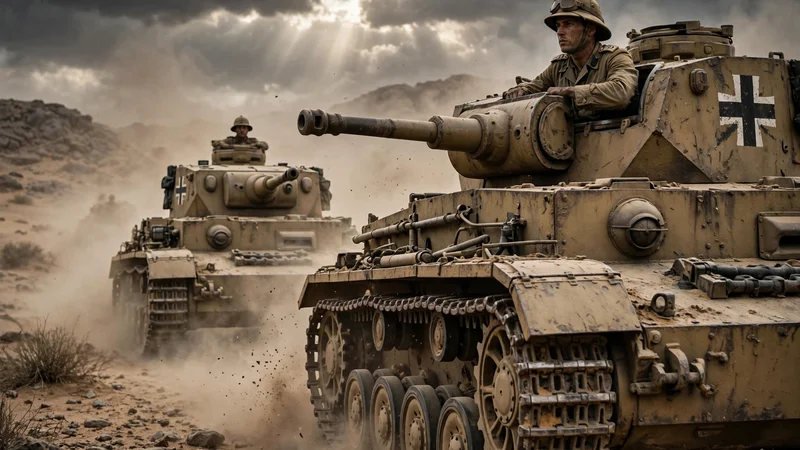
On the morning of July 12, Rotmistrov's tanks attacked the II SS Panzer Corps head-on across open ground. What followed was a close-range brawl. Tanks killing tanks at a few hundred meters. Smoke and burning vehicles across whole fields. The Red Army lost roughly 300 to 400 tanks and assault guns in a single day. German losses were far lighter, dozens of permanent write-offs, though many more vehicles were damaged and later repaired. Military historians Niklas Zetterling and Anders Frankson, working from both German and Soviet archives, count 294 German and 616 Soviet armored vehicles in the narrow battle area. The famous story of 1,500 tanks clashing at once? That's a myth built on inflated postwar claims. But nobody who studies the archives disputes the ferocity of the fighting.
So who won at Prokhorovka? Tactically, the Germans inflicted far heavier losses. Strategically, the Soviet attack stopped Manstein's spearhead cold. It never broke through to Kursk. Both statements are true. Welcome to the Eastern Front, where the scoreboard and the outcome rarely agree.
And one day later, the whole German offensive was dead anyway.
While Prokhorovka Burned, the Soviets Struck Back Twice
On July 13, Hitler summoned Manstein and Günther von Kluge to his headquarters. The news from Sicily, where the Allies had landed on July 10, hung over the meeting like smoke. The Orel salient was under attack. The southern thrust had stalled. Hitler suspended Operation Citadel. Nine days after it began, the great offensive was over.
But the Soviets were just getting started. On July 12, the same day as Prokhorovka, Operation Kutuzov had opened against the Orel salient in the north. Then, on August 3, Vatutin's Voronezh Front and Konev's Steppe Front launched Operation Rumyantsev against Belgorod and Kharkov in the south. Belgorod fell on August 5. Orel fell the same day. That night, Moscow fired its first artillery victory salute of the entire war, 124 guns, a tradition born at Kursk that would continue to Berlin.
The fighting for Kharkov lasted until August 23, when the city fell to Konev's troops. That date marks the end of the Battle of Kursk: seven weeks, from July 5 to August 23, in which the Red Army absorbed Germany's best punch, counterattacked on both flanks, and shoved the front west along a line some 2,000 kilometers wide. If you're keeping score at home, that's the definition of seizing the initiative.
Why Kursk Actually Ended the War in the East
Here's the uncomfortable truth about Kursk: it was won by arithmetic, not genius. After August 1943, Germany never again launched a strategic offensive on the Eastern Front. Manstein would still win defensive battles, and the Wehrmacht would still fight with terrible skill, but the initiative belonged to the Red Army from Kursk to Berlin. That is what the battle decided.
The arithmetic is brutal. For the whole battle, German casualties ran to roughly 200,000 killed, wounded, or missing. Soviet casualties ran to roughly 863,000, including 254,470 killed, missing, or captured and 608,833 wounded or sick, the figures compiled by the Russian military historian Grigori Krivosheev from Soviet archives. The Red Army lost more than four men for every German. And still won. That sentence is the whole secret of the Eastern Front: the Soviet Union could replace its losses, and Germany couldn't.
The tank math tells the same story. The Soviets lost about 6,064 tanks and assault guns destroyed or damaged in the battle. German tank losses were a fraction of that, somewhere between 760 and 1,600 depending on how you count. But Soviet factories behind the Urals were building T-34s faster than the Germans could kill them, while every Panther and Tiger lost at Kursk was irreplaceable. Germany's new wonder weapons had their combat debut at Kursk, and it was an embarrassment: Panthers broke down, Ferdinands got swarmed by infantry they couldn't shoot. The myth of German armor superiority died in those minefields.
Stalingrad, the winter before, had destroyed an army; our Battle of Stalingrad summary tells that story. Kursk destroyed something bigger: the possibility of a German recovery. A year and a half later, Germany would gamble everything on one last offensive in the west. Our Battle of the Bulge summary covers that final fling, and it reads like an echo of Kursk, except this time the trap was the Ardennes. See how Kursk ranks among the greatest battles of WW2.
The Honest Catch Nobody Likes to Admit
Let's not pretend Kursk was a clean triumph. The Red Army paid a staggering price, roughly 860,000 casualties against Germany's roughly 200,000, and much of that blood bought very little ground. At Prokhorovka, Rotmistrov hurled his tanks straight at prepared German guns and paid for the mistake in burning T-34s. Soviet propaganda then inflated German losses at Prokhorovka for decades, and some of those inflated claims still show up in popular histories. The "largest tank battle in history" label is one of them.
And Kursk didn't end the war. The Wehrmacht fought on for nearly two more years, and the road from Kursk to Berlin cost millions more lives on both sides. If you want a battle that "decided" the war in a single stroke, Kursk isn't it.
But here's what Kursk did prove, and it's worth sitting with: you can lose nearly every tactical exchange and still win the campaign, if the arithmetic is on your side. Germany won the kill ratios at Kursk, at Prokhorovka, and in the air. It lost the battle and the initiative. The war was next. Tactics are how you fight. Arithmetic is whether you can afford to keep fighting. Kursk was the moment Germany ran out of arithmetic.
3 Lessons from Kursk
Kursk is history, but it's also a case study in how plans die. Three lessons worth stealing:
1. Never attack where the enemy has spent three months digging. Sounds obvious. It wasn't obvious to the German high command in 1943. If your rival can see your move coming, if they've prepared for exactly that move, find a different move. The two-month delay for the new Panthers turned a questionable plan into a doomed one. Speed of decision matters more than perfection of preparation.
2. Keep a reserve, always. Zhukov held the entire Steppe Front hidden behind the lines while the Germans committed everything they had up front. When the crisis came, he had fresh armies to feed in. The Germans had nothing left. In business, in projects, in life: never commit your last unit. The reserve is what turns a crisis into an opportunity.
3. Fix the fundamentals before you get clever. German generals out-fought the Red Army at Kursk, tactically, and it changed nothing. When the fundamentals are against you, numbers, production, logistics, no amount of brilliance saves the plan. Audit your fundamentals first. Cleverness is a multiplier, and a multiplier on zero is still zero.
Sources
- Wikipedia, Battle of Kursk
- Journal of Intelligence History, The Armoured Losses of the II SS Panzer Korps at Kursk
- World of Tanks, Battle of Kursk: Timeline
- Armchair Dragoons, Operation Citadel (Kursk), 5 July-23 August 1943
- Torro (citing Frieser; Zetterling and Frankson), The Battle of Kursk: Turning Point of the Second World War
- War Thunder, The Battle of Kursk
- EBSCO Research Starters, Tank Battle at Kursk Devastates German Forces
- Alan Dotchin, The Battle of Kursk (July-August 1943): The Clash of Steel